


Our cultural tour of Java continued as we transitioned from the capital city of Jakarta to the cultural capital of Yogyakarta. On the train, we passed through a vast network of small rice paddies. Our three days in Yogyakarta included temples, volcanoes, and living culture. It was less about museums, which we had covered in Jakarta, and more about exploring sacred temples, watching artists in action, and standing on the site of a spiritually revered volcano.
I planned one major activity a day and let the rest fall into place with plenty of pool time at our hotel during the afternoon heat. Since Yogyakarta is the cultural heart of Java, there are quite a few temples. I wanted to balance temple time with outdoor time.
Our itinerary included these locations, which I’ll describe below.
Curious about the train? See my article on train travel across Java.
This was my third and best visit to Borobudur Temple. Best because in previous sojourns decades ago there was limited access because of massive reconstruction. This time, I finally got to see the entire temple without scaffolding.
Borobudur is famously the largest Buddhist temple in the world. As Indonesia’s most popular tourist attraction, expect company. If you’ve been to Angkor Wat in Cambodia, which is the largest Hindu temple, the scale is different. Borobudur is a single, albeit massive temple, while Angkor Wat is akin to a city-wide complex.
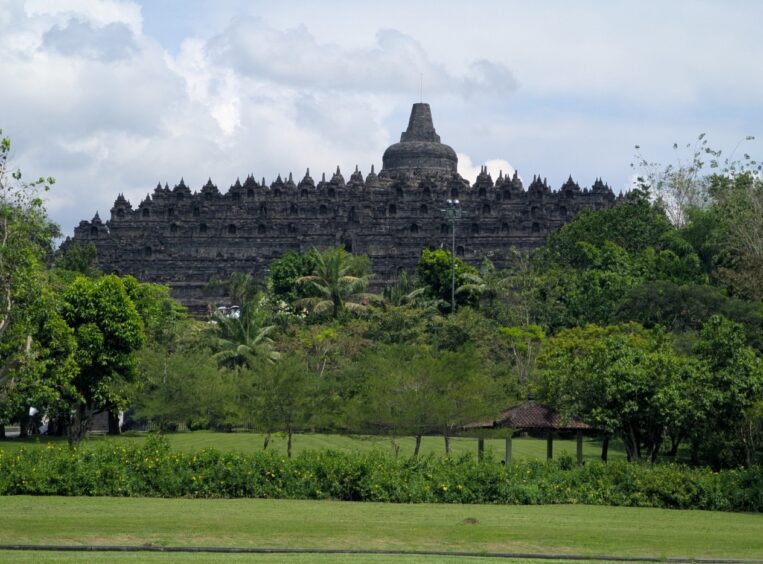
I marveled at the efficiency of this UNESCO World Heritage Site as hordes of people were sorted into manageable-sized tour groups by language, each accompanied by a guide who pointed out key features inscribed in a few of the 1460 relief panels. We stopped for Instagram-worthy photos in places he knew were optimal and learned key facts. Built in the 8th century, it faded after the 14th century rise in Islam in Java. Sir Stamford Raffles couldn’t have discovered it, since local citizens always knew it was there, but he learned of it in 1814 and broadcast it to the world. Since then, it has become a revered monument, symbolizing a great Javanese past.
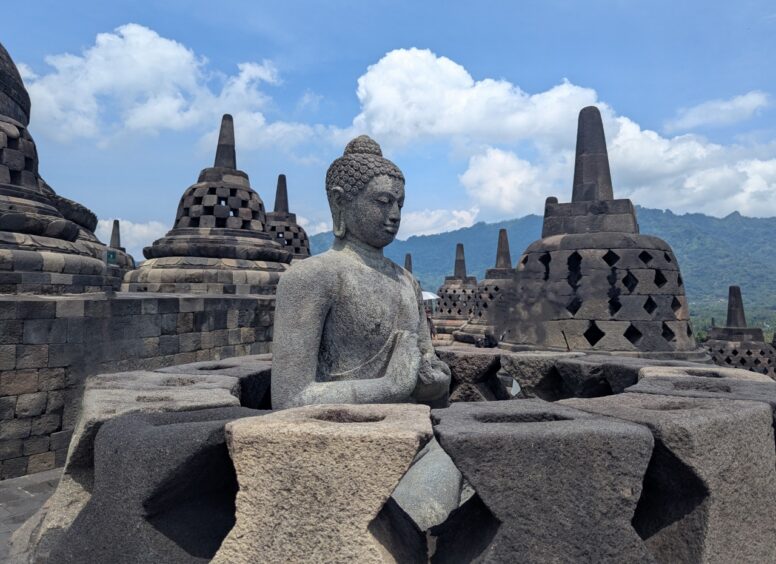
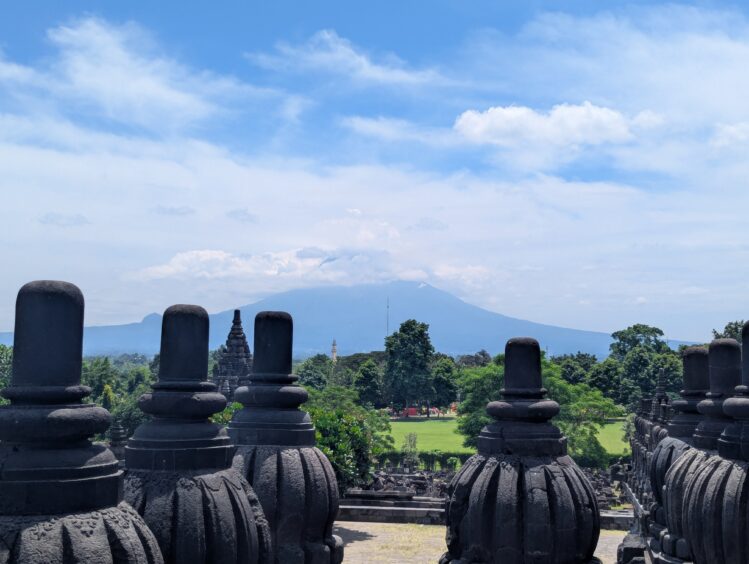
My favorite section was one I had never seen before. The 72 Buddha statues near the top of the 115-foot structure, each seated inside a lattice-like stone stupa, were magnificent. I enjoyed taking some quiet time, sitting with the Buddhas, looking out over the tops of trees at Mount Merapi, contemplating the rubber-banding of time between my excursions to this special place.
Read about how our culture tour started in Jakarta.
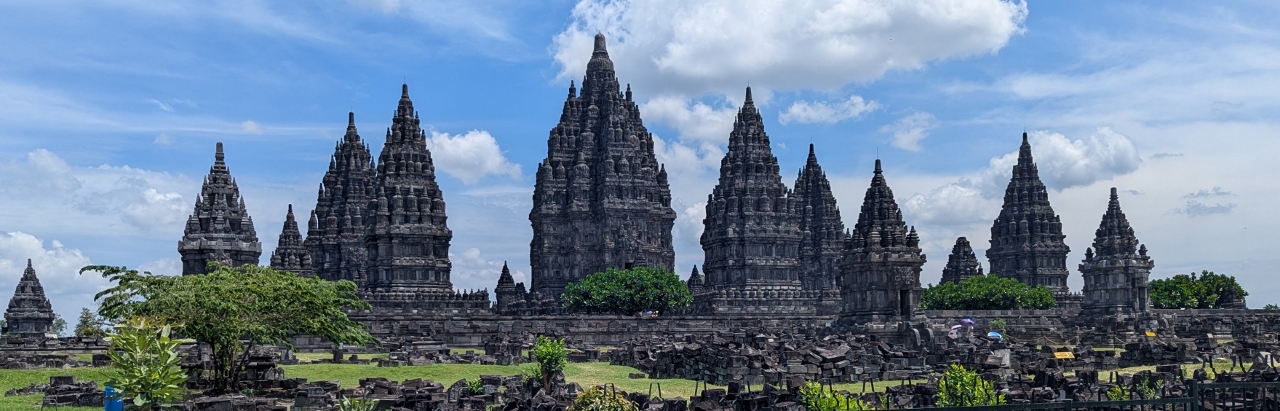
Rivaling Borobudur, the Hindu PrambananTemple is the largest in Indonesia, second largest in Southeast Asia after Angkor Wat. Unlike the single temple of the Borobudur, the Prambanan Hindu Temple comprises several temple complexes scattered over 98 acres.
Like the Borobudur, it is a UNESCO World Heritage Site. The overall vibe is more relaxed than Borobudur. Once we bought our tickets, we were free to wander through the complex. Guides were available but not required. We hired a guide who showed us around the main temples, then left us to amble around on our own.
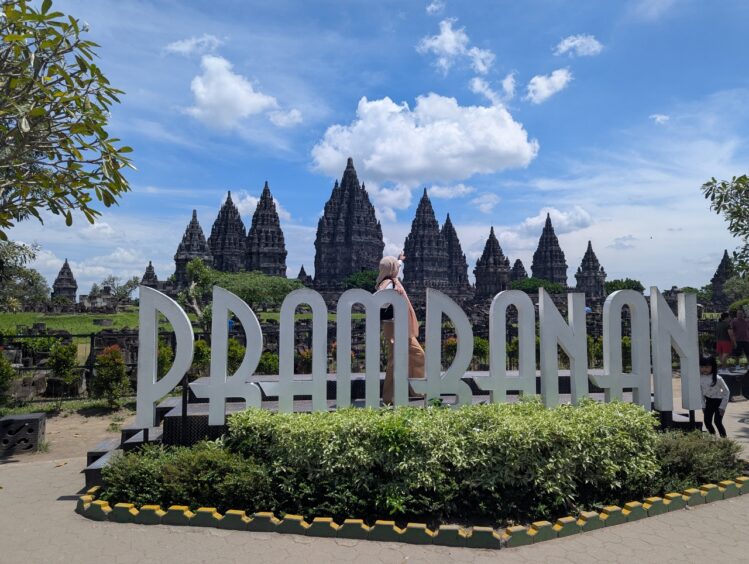
I found the site to be peaceful and attractive; the pathways inviting a slow stroll. However, no matter how slowly we went, the heat pressed in around us, threatening to suffocate us if we didn’t find air-conditioning and a cold drink immediately. After clambering up and down narrow, sloping ancient stone steps to see all the Hindu gods tucked away in individual niches, we melted across a path to an air-conditioned gift shop. We displayed an unusual amount of interest in every scarf and earring to prolong our stay, eventually sliding back into the heat. We found a cold Fanta Orange and sat as still as possible before moving to a museum that sadly did not have AC.
This was the least memorable of the top three attractions in the city, but I think it’s still important to acknowledge the uniqueness of the Special Region of Yogyakarta. Yogyakarta remains a monarchy within the Republic of Indonesia, and the sultan serves as a permanent lifetime governor of Yogyakarta under the president of Indonesia. The palace is his home as well as a living museum.
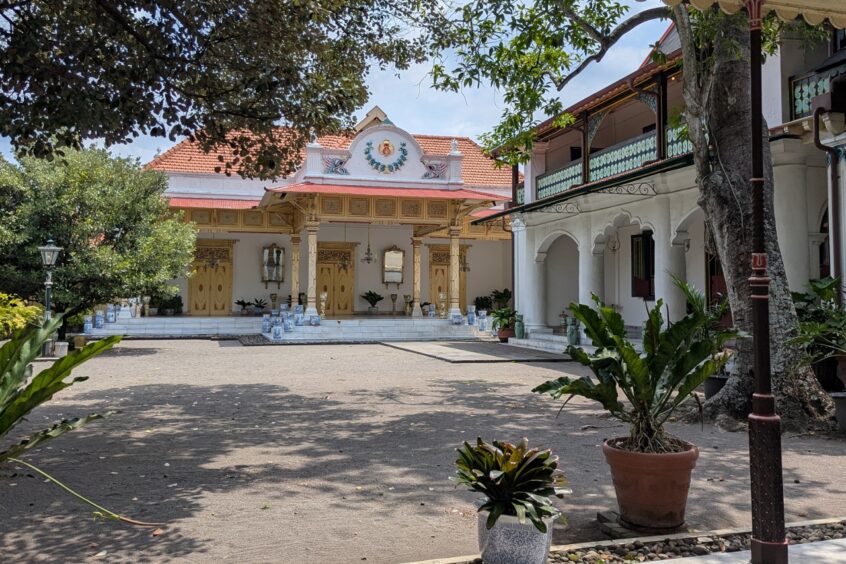
In the past, although Jakarta was the administrative center of the Dutch East Indies, Yogyakarta has long been the seat of culture and the arts in Java. It even served as the capital of Indonesia when Jakarta was occupied by Dutch and Allied forces during World War II.
The palace lacks the grandeur of royal palaces in London or Madrid, but is a vibrant showcase of Javanese art and culture in open-air pavilions and leafy walkways. Surrounding the palace are many artists, and other attractions are within walking distance.
One of the spontaneous highlights of Yogyakarta was a stroll through the neighborhood surrounding the palace. A mix-up in getting tickets resulted in a prolonged delay. We settled on a bench in the shade of a tree, ready to wait, when an enterprising young man offered to show us batik-making. It could have been a scam, but I didn’t care. He was entertaining, and we had nothing better to do.
Our encounters with artists ended up overshadowing the palace itself. We were able to converse with an artist painstakingly creating batik designs the old way, the way I remembered from decades earlier. A thin pen made of wood held a small copper cup holding hot wax. A tiny, beak-like metal tube was pressed against the fabric in a smooth, flowing motion to draw hot wax on the cloth. Intricate floral clusters, intersecting circles, and slanting bands were used to describe natural or mythological scenes, sometimes in repeating patterns or elaborate passages.
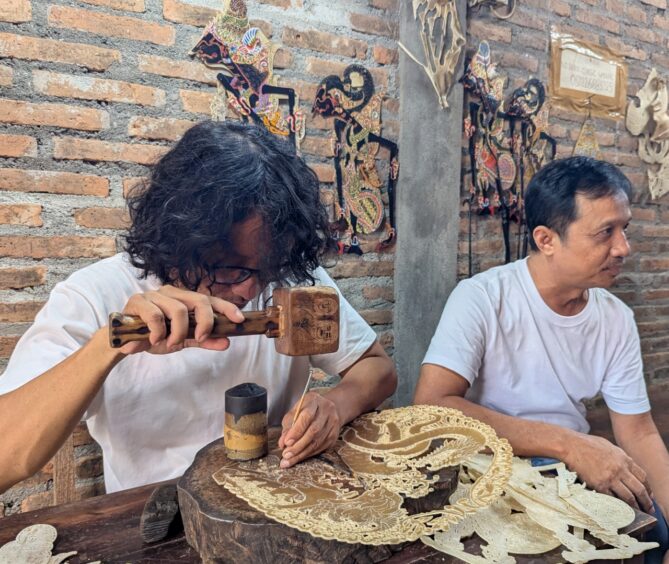
In another building, an artist was working on a piece of thin, translucent leather, creating the flat shape of wayang kulit (shadow puppet). With a long piece of bone forming the handle, these puppets have long been used by puppeteers to tell epic stories of the Ramayana. Performed in a theater or against a simple cloth in an open-air pavilion in villages across the island, the dissonant yet melodious sounds of the gamelan orchestra accompany the plays.
In an art gallery, we selected a beautiful art piece depicting the Tree of Life as a banyan tree. What a surprise to actually meet the batik artist, who described his inspiration of the interconnectedness of all living things.
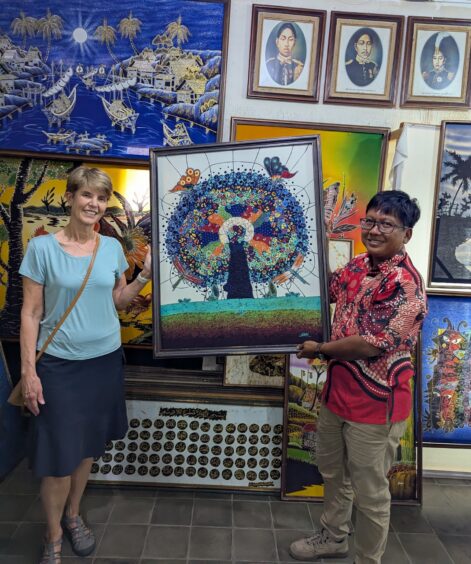
The experience felt special, though at the time, I didn’t grasp how these art forms were become lost arts. Artists like these were so familiar to me in my travels in the 1970s and 80s that I thought we’d start seeing them everywhere. Later in the trip, I realized that most of the previously ubiquitous batik shops had disappeared, replaced by cheap clothing from China.
We tipped our guide generously, grateful for the opportunity to meet local artists.
After spending a few days in Jakarta, then touring the temples in Yogyakarta, I was ready to get out of the city and experience nature with Jeep Tour Merapi (by JTM Adventure). After days of sweltering temperatures, it was refreshing to need a jacket at the higher elevation. Our guide was fun and we enjoyed both the kitschy tourist parts and the more serious parts.
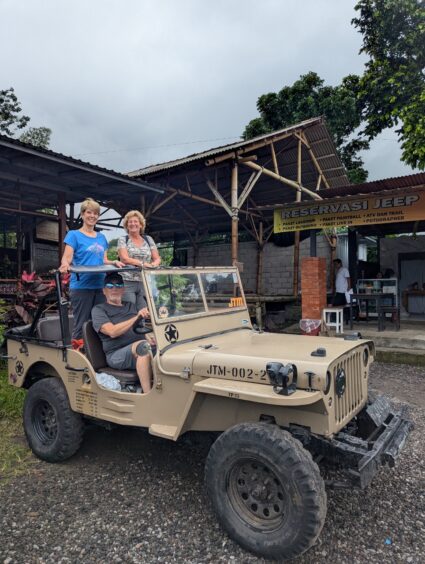
Our jeep tour to Mt. Merapi turned out to be a fascinating day of wondering where a disappearing river went after an eruption, seeing frightening examples of past explosions, and learning what it’s like to live on the edge of an active volcano. Not just sort of active. It’s one of the most active volcanos on earth. When we were there, it had been flowing continuously since December 2020 (now over five years). It left me with the sense that, instead of standing on solid ground, we were in the presence of a living being.
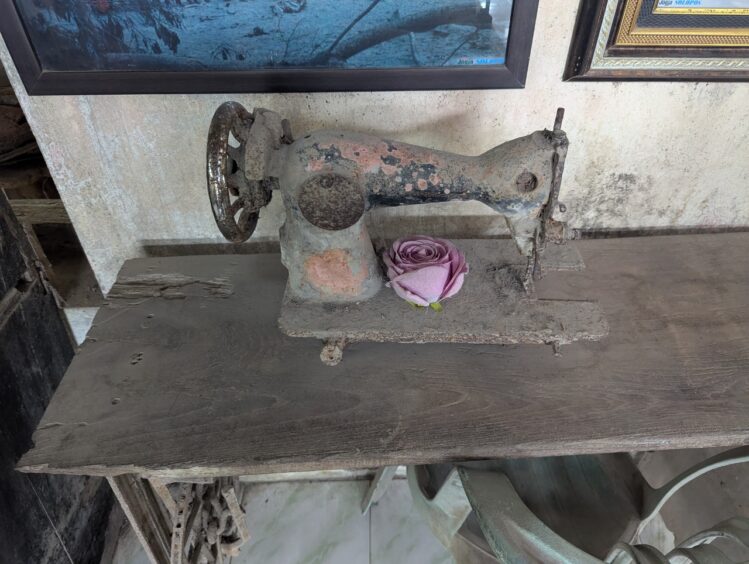
Mt. Merapi is a powerful focal point for the region, and all three of the cultural sites we explored, including the Borobudur and Prambanan Temples and the Sultan’s Palace, align geographically and spiritually with the mountain. It felt right to call in on the mountain directly and stand on its flanks, feeling its power, as we looked back at the city spread out below.
A big surprise to me was the difficulty in finding a wayang kulit (shadow puppet) performance in Yogyakarta. In the 1970s and ‘80s, it was so easy that we hardly thought about it. We’d stumble across a performance without even trying. This time, I kept hitting dead ends, finally pivoting to wayang orang, a wonderful adaptation of shadow puppetry using human dancers at the Purawisata Amphitheatre. Precise stylized movements mimic the stiff movements of leather puppets while accompanied by a gamelan orchestra.
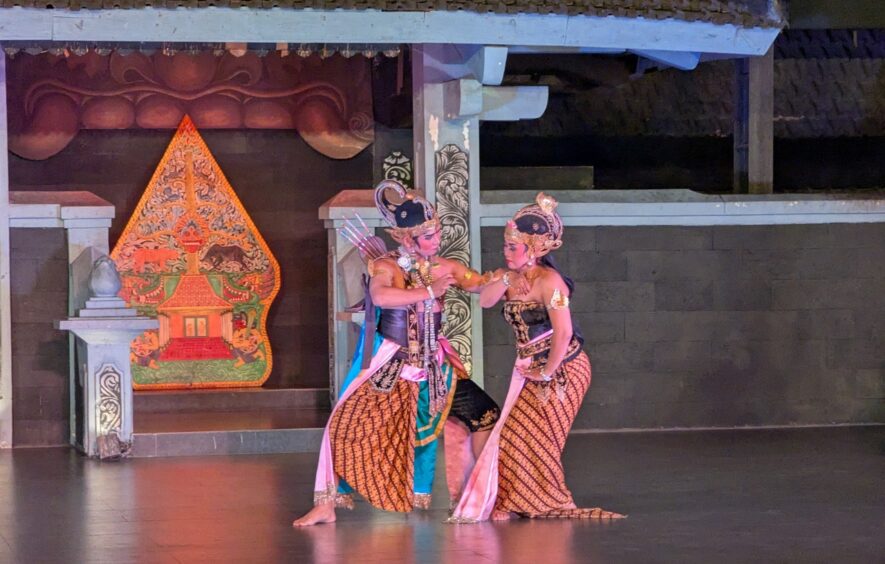
The love story from the Ramayana was explained in a helpful handout. Our tickets included dinner in a pleasant garden space adjacent to the theater.
The 20- to 30-minute drive from the station to Rumah Mertua Heritage Hotel in the Ngaglik District was nothing when we traveled from the train. It got repetitive when we traveled this route once or twice every day. For those wanting to maximize their sightseeing time, I’d recommend staying in the Malioboro area.
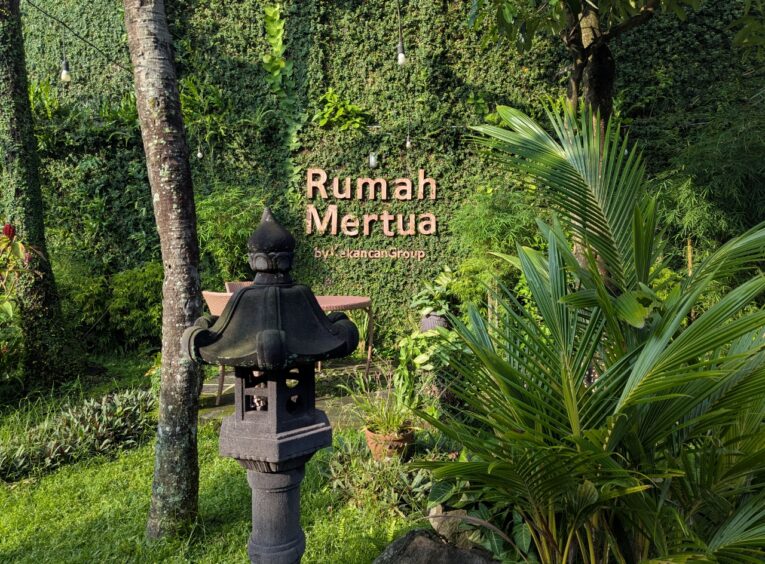
Since we had a relaxed schedule, we grew to appreciate the quiet nature of the village-within-a-city with its nearby soccer field where kids played nearly every day, chickens roamed free, and low rooflines created an open feeling. We felt safe strolling around the neighborhood and found a convenience store nearby. We were thankful no mosques were located nearby so we could sleep through the 4:30 AM call to prayer.
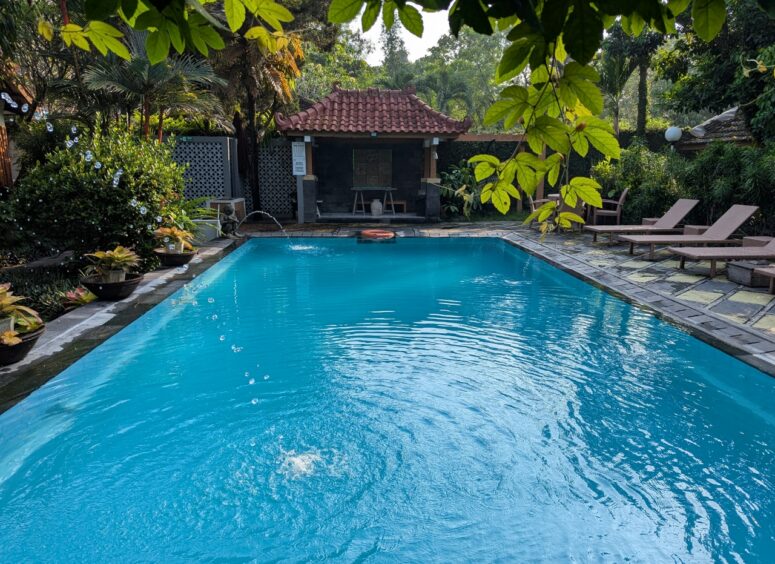
We discovered that the Hyatt Regency Yogyakarta, set on a lush 22-acres, had a wonderful restaurant in an upscale tropical setting. The back of the property was near our hotel, but to get to the front entrance required a taxi ride.
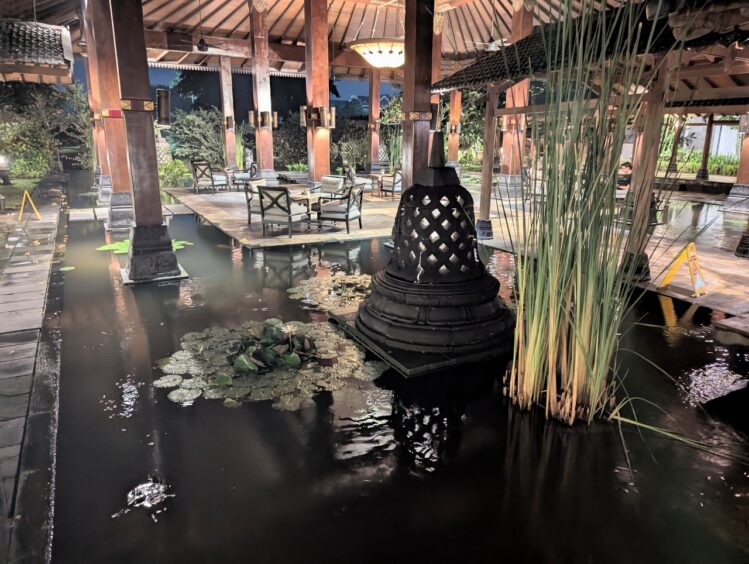
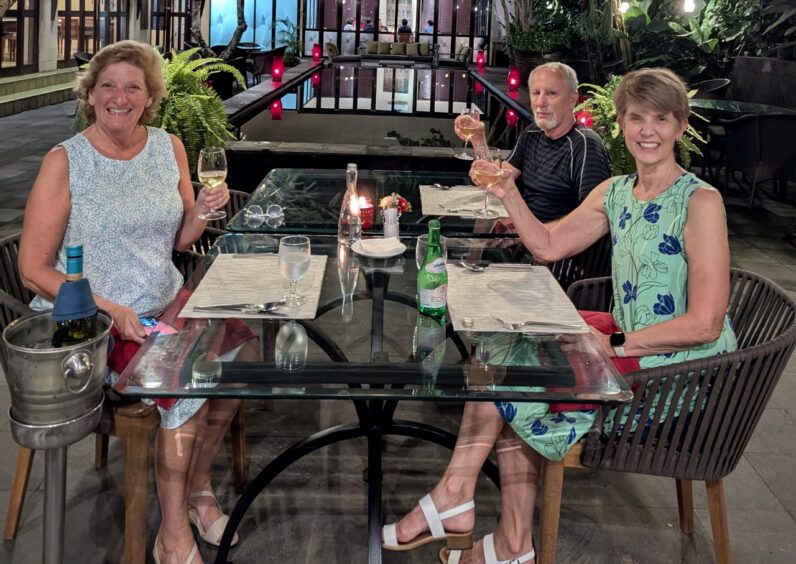
After that, we discovered the lovely Sasanti Restaurant next door to the Hyatt, which became our favorite for delicious Indonesian food.
Tickets to the temples may be purchased at InJourney Destinations in advance. It’s strongly recommended for Borobudur and makes things more convenient at the Prambanan.
Both the Borobudur and Prambanan Temples are substantial distance from centra Yogyakarta in different directions. Count on an hour of drive time, depending on your location. It’s possible to see them both in the same day, but it would be a lot of driving.
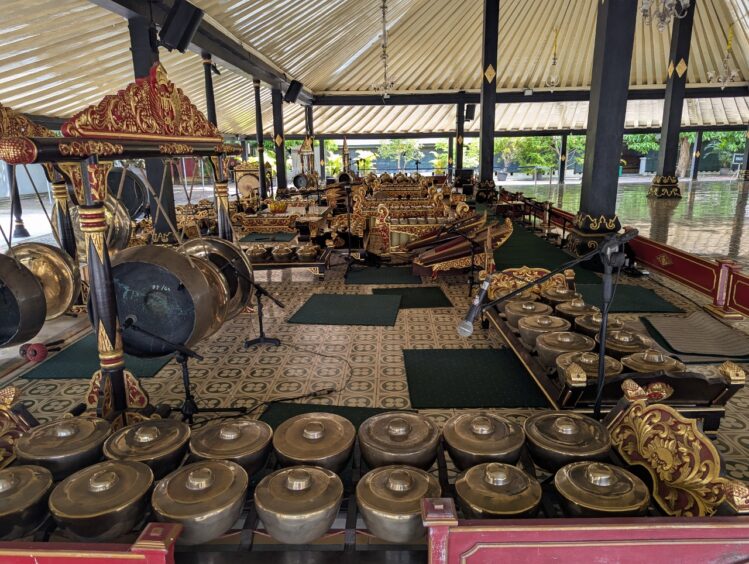
For the Kraton Sultan’s Palace, tickets may be purchased onsite.
Our hotel made our arrangements for Jeep Tour Merapi (it’s about an hour to the mountain) and the dance performance at Purawisata Amphitheatre (in the Malioboro District). Both included pickup at our hotel.
To get around town, we used the Grab app for rides. The hotel arranged a car and driver upon request or tours are available to the major tourist sites.
Our three days in Yogyakarta included temples, volcanoes, and living culture. Combined with our museum visits in Jakarta, we felt as though we were immersed in Javanese traditions and were ready for some relaxation time in Bali (See Bali Then and Now: A Smarter Way to See a Changed Island).
Read more about Indonesia itinerary planning in my guide to the islands.
 Previous Post