


The surprises started moments after landing on the tarmac at Soekarno-Hatta International Airport in Jakarta, Indonesia. It had been so long since I visited I expected another modern Asian airport. Instead, a relaxed stroll through traditional Joglo-style pavilions charmed me. Between each pavilion was an enticing tropical garden. Nostalgia smacked me in the face. I took a deep breath, feeling the warmth of the humid air. Was it possible that the airport was the same? Would I remember other parts of Jakarta? I’d find out during my two 2 days in Jakarta.
As we exited the airport, I saw the terminals were straddling two worlds. The glass and steel behemoth of Terminal 3, the newest terminal, contrasted mightily with the older Terminals 1 and 2, built in 1985 and 1991, respectively.
Like many big Asian cities, Jakarta can be polarizing. You love it or hate it. In travel groups online, I noted that many people recommended not stopping there. Could it really be that bad? I used to spend a lot of time in Jakarta, but now that direct flights to several islands are available, I had been skipping it.
My parents lived in Jakarta in the 1970s and 80s, and while I was at university, I visited every summer. My mother and I would take off and travel through the islands for weeks. I remembered the intense heat, the din of unrelenting traffic, and a few big buildings downtown surrounded by vast acres of low, red-tiled roofs in the capital city. My parents enjoyed it, but to me the real Indonesia was everywhere else.
Hearing about the relocation of the captial shocked me. They aren’t moving Jakarta, of course. The administrative work of the capital will move. They are building the new city of Nusantara in East Kalimantan, Borneo. Officialns planned the Inauguration for 2024 (two years ago), but that date has come and gone. We shall see what transpires. Construction has slowed due to financial constraints.
When planning our recent month of travel around Indonesia, I started feeling sentimental about Jakarta, pondering how much it had changed. I wondered if I could talk my husband, Steve, and best friend, Cindy, into spending a few days in the city.
“I’ve been thinking about visiting Jakarta first. There’s not much to see, the traffic is horrible, and it’s likely to be unbearably hot,” I said, playing up the charms. “In the travel forums, most people say there’s nothing to see there.”
“Sounds good. I love big Asian cities,” said Cindy, unphased by my description.
“It seems weird that I’ve been to so many other islands and I’ve never been to Jakarta, much less the rest of Java. Let’s do it,” said Steve. He was right. Togther, we had visited Sumatra, Bali, Lombok, the Gilis, Flores, Sulawesi and Raja Ampat, but had never been to Java, the largest and most populous island in the achipelago.
Jakarta is a great place to start if you’re new to the culture of Indonesia because there are excellent museums to provide a good foundation. Since all three of us had a strong interest in history and culture, I focused on museums for our stay in Jakarta. Later, we’d see the temples in Yogyakarta, and after that, we’d play in the sun and surf on other islands.
One revelation was the attractive and beautifully organized central business district of Jakarta. Traffic flowed smoothly, and large teams of gardeners meticulously manicured grassy strips with colorful foliage along the roadways. I remembered a crush of bicycle rickshaws and bemos (shared vans) careening around with little regard for traffic rules. Neon signs on towering skyscrapers flashed the names of all the global companies you’d expect in any major city.
Because our initial venture pleasantly surprised us into the heart of the city, it set the stage for the rest of the trip. We eagerly anticipated our sightseeing itinerary.
I was fortunate to get some tips about where to stay and eat from a friend who lived in Jakarta recently.
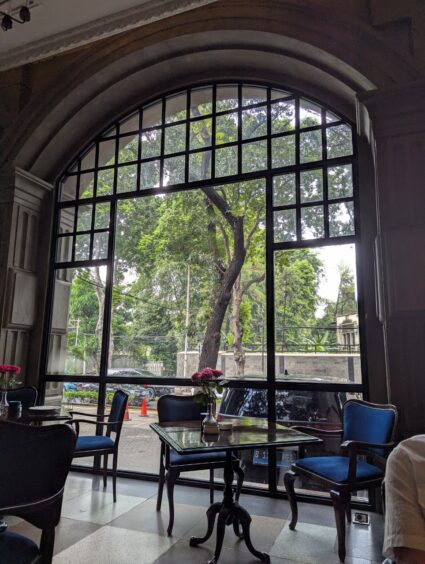
The Gunawarman Hotel (4-stars) was our pick. We liked the classic look of the three-story building shaded by trees in the trendy area of Kebayoran Baru (also known as Blok M). It’s a new building that was built to look timeless. The rooms were nicely decorated with rich wood, warm tones and modern amenities such as air conditioning, coffee maker, Wi-Fi, and cable TV. We loved the convenience of the onsite Sofia restaurant and being able to walk to several excellent restaurants. I chose this location because it’s in the same neighborhood where my parents lived in the 1970s.
The Orient Hotel (5-stars) was also recommended. It’s closer to the main tourist sites in the Central Business District, but the neighborhood isn’t as walkable as the Gunawarman. It’s an elegant hotel with two pools, a spa, and on-site Spanish, Japanese, and Californian restaurants.
Pantja Restaurant was a quick walk from the Gunawarman Hotel. Recognized as one of Asia’s 50 Best Bars for the last three years, it had an impressive array of cocktails. The dinner menu featured Asian and Italian fare. The wagyu beef was tender, the Korean short ribs were savory, and the black cod in miso tickled my taste buds with its delicate flavor.
Sofia, located inside the Gunawarman Hotel, was elegant with soaring ceilings and comfortable seating. Looking out the large windows through the leafy trees at the traffic flowing outside made me feel very satisfied that I had nowhere I had to be and could relax in such a luxurious setting—the kind of moments to be savored on vacation. Italian, French, and Asian fare provided a wide range of dishes to appeal to the international traveler.
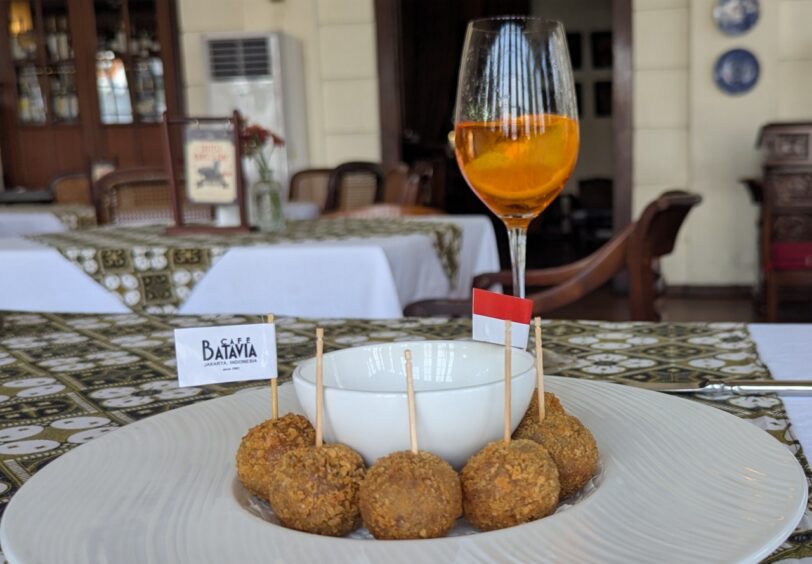
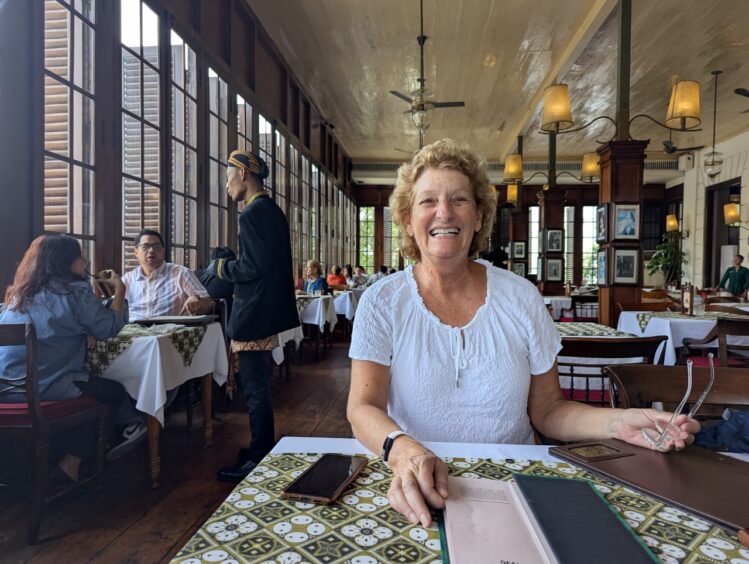
Housed in one of the oldest buildings in Old Town Jakarta (Kota Tua), Café Batavia is another place that harkens back to another time. Dutch colonials built the building in 1805 to house high-ranking officers. It has functioned as a five-star restaurant since 1993. We lingered at the memorabilia-covered walls until the attentive staff seated us. The dining room was bright and airy with tall windows that looked out on the open plaza, Taman Fatahillah. Reservations are recommended.
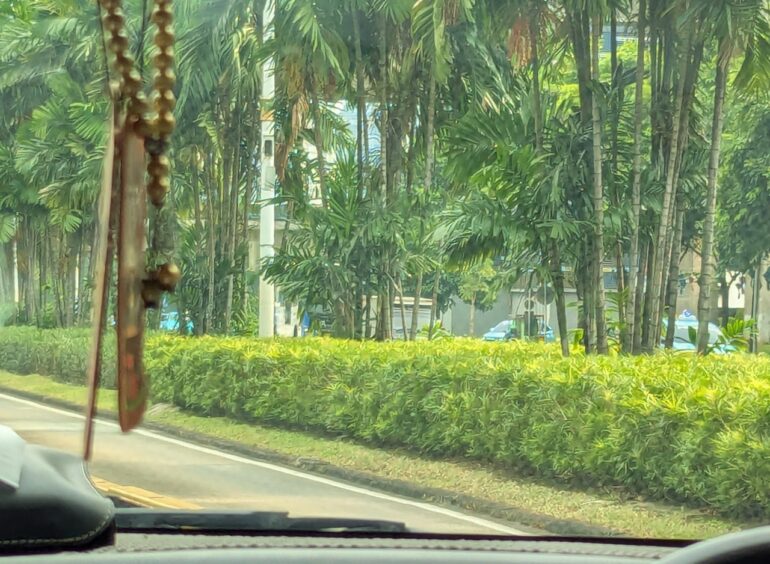
Grab or Gojek are the main ride sharing apps in use in Indonesia for rides in cars or motorcycles (helmets usually provided). We downloaded the Grab app and found that it works like Lyft or Uber in the US. Sometimes we’d have the hotel get us a taxi.
Bluebird is a reliable, widely used taxi service with other transportation solutions that is also bookable through the MyBluebird app.
Fun fact: Jakarta is the world’s most populous city with over 41 million residents in the metro area. For comparison, the New York-Newark-New Jersey metro area is only 20 million. It’s best to group activities together that are geographically close, tackling a different neighborhood each day.
All the Day 1 activities were in the Central Business District of Jakarta. Our hotel procured a taxi for the 20-minute drive.
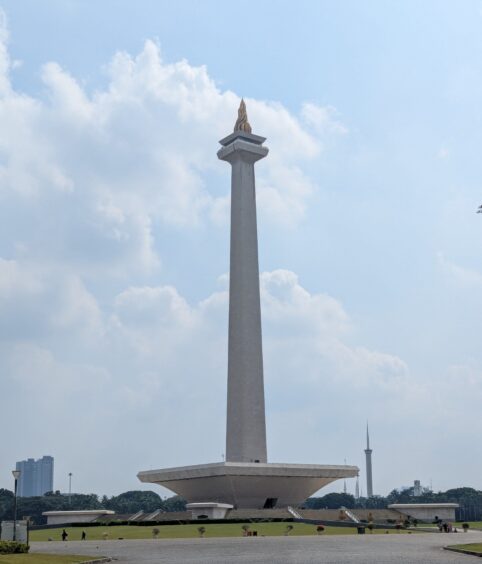
The National Monument is a good place to get oriented to central Jakarta. Known as Monas (Monumen Nasional), this 433-foot obelisk represents the struggle for independence from the Dutch, achieved in 1945. It stands out because it’s tall and it’s surrounded by an enormous open area in the middle of the booming Golden Triangle, as the central business district is referred to. This area is otherwise dominated by gleaming skyscrapers, massive shopping centers, and impressive foreign embassies, so this much open space provides welcome breathing room.
The National History Museum (Museum Sejarah National) is located at the base of the monument, while the observation deck is at the top of the tower. It is accessible by elevator.
The 200-acre gardens of Merdeka Square are pleasant for walking if it’s not too hot. Surrounding the complex are the Gambir Railway Station (which we noted for our departure), the Supreme Court, Presidential Palace, US Embassy and other cultural sites.
Unfortunately, we didn’t get to give this the time it deserved because multiple people mistook my request to be taken to the National Museum of Indonesia (across the street from Monas) to be the National History Museum (at the base of Monas). If it sounds close, know that the entire perimeter of Merdeka Square is fenced in. I could see the National Museum building through the ornate fence, but it still took a hike to get there, and I despaired of making the one English-language tour given during our time there.
Details: The monument is closed on Mondays and public holidays. There is a small admission fee to enter, but the surrounding area is free. Direct the taxi to Monas.
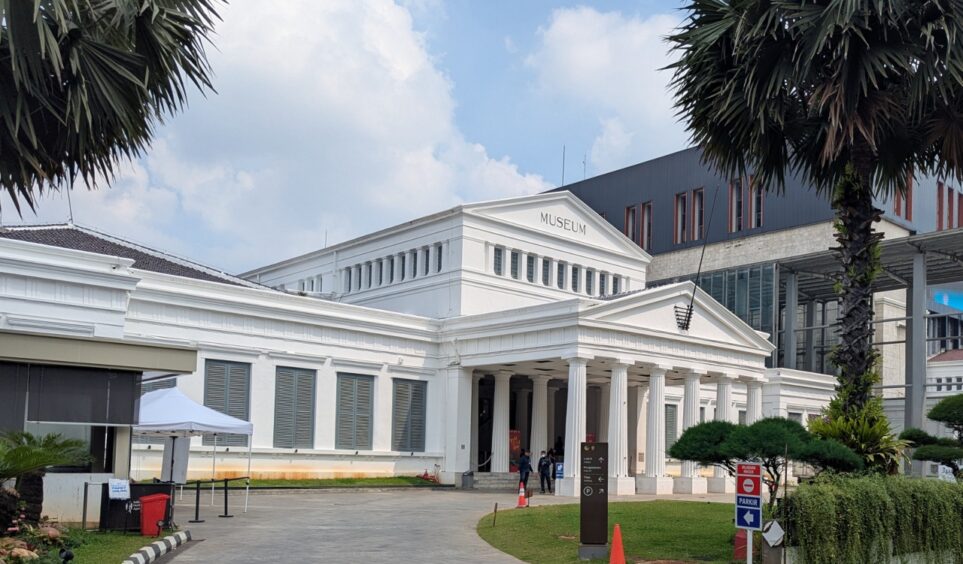
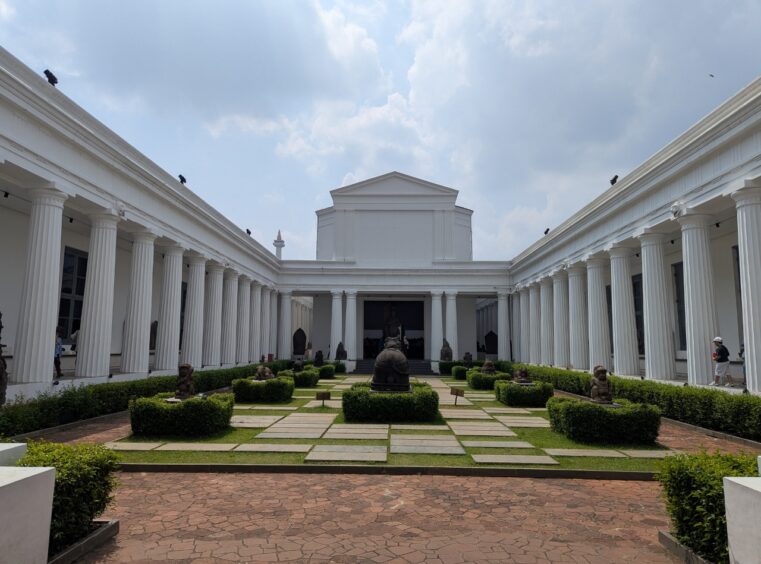
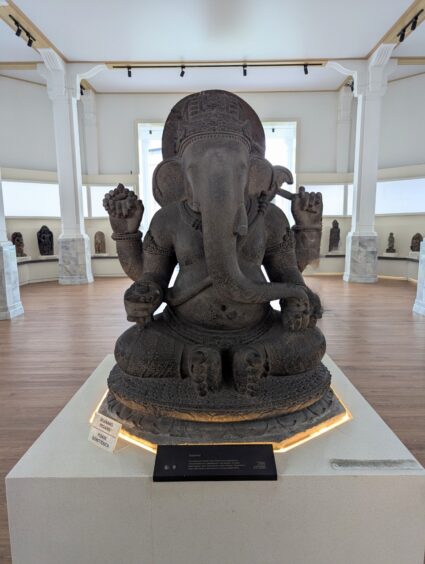
Don’t let the small size belie the significance of the National Museum of Indonesia as one of the best museums in Southeast Asia. They have an extensive collection of artifacts from prehistoric to modern times, and this is an excellent place to get grounded in the history of Indonesia.
An open-air courtyard provided the necessary open space to be able to appreciate the very large Hindu and Buddhist stone sculptures. Ornate Kris knives with curvy blades, delicate bark manuscripts, and string bags from ancient times and distant islands spoke of the deep history of a land that has been inhabited for at least 1.5 million years. It also stirred memories of similar objects my parents had on display. I hadn’t always understood the significance of certain items, so I soaked up all the interpretive signs.
Our English-language tour was excellent, providing commentary that added depth and helped us focus on the most important pieces in each room without getting overwhelmed.
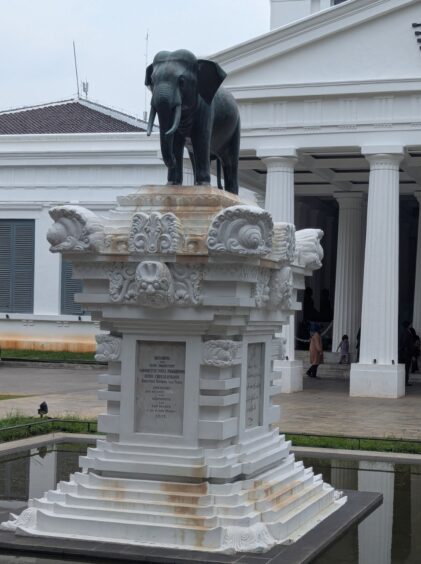
Details: The museum is closed on Mondays and holidays. There is an admission fee. Direct the taxi to the Elephant Museum (Museum Gajah) on Jalan Merdeka Barat #12. You can mention National Museum but see above for confusion with Monas. I want to emphasize that it is outside the gates of Merdeka Square and they should pull into a circular driveway before a building with white columns on one side and an elephant sculpture on the street side.
Volunteer docents from the Indonesian Heritage Society provide English-language tours (and other languages). Check their website for the dates and times these are offered.
If you’re like us, there are a few things you might need to pick up at the start of your trip. We stopped by the Grand Indonesia Mall, which has every global chain store you could hope to find in any city, including London, New York, or Tokyo (H&M, Uniqlo, Zara, etc.).
Alun Alun (3rd floor-West Mall) was our favorite store with its vast selection of batik clothing and local Indonesian wares.
They also have the Foodprint food court (5th floor, West Mall) and many restaurants in the East and West Malls where you can nosh.
Details: Direct the taxi to East or West Malls. H&M and Zara are in the East Mall. Alun Alun is in the West Mall. The two sides of the mall are connected by a skybridge.
We were prepared for the hour-long drive across town to Kota Tua (Old Town), the historical center of Batavia, on Day 2. The toll road was efficient, and the pleasant ride only took 45 minutes.
It was interesting to leave the gleaming business district and observe the neighborhoods flattening into lower buildings and feel the increasing density the farther out we got. I looked forward to the contrast between seeing neighborhoods where regular working-class people lived as opposed to the moneyed feel of the central district.
Because of the urban concentration, we couldn’t see water or ships and never felt like we were close to the water, though we were close to Ancol Harbor. If you have time to visit Thousand Islands (see below), Ancol Harbor is the departure point.
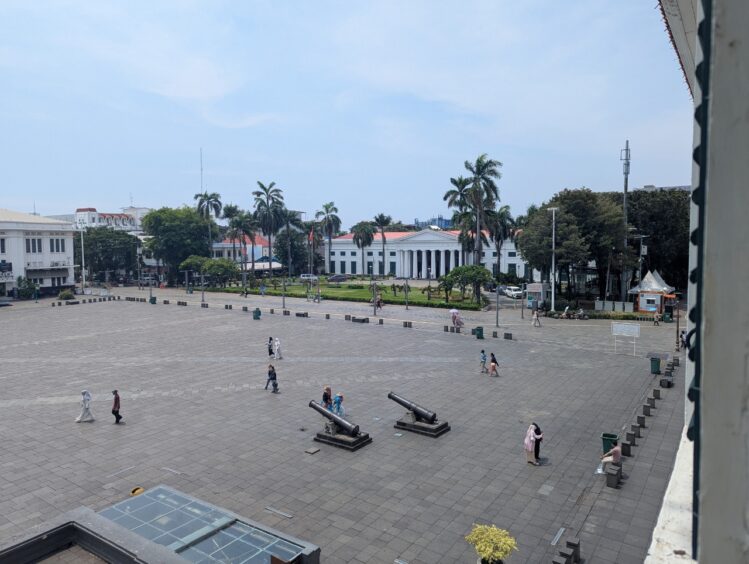
The wide-open expanse of Fatahillah Square (Taman Fatahillah) was inviting, save for the intense heat bearing down on us with no shade in sight. Colorful bicycles for hire beckoned, but we knew we’d be sweating in seconds. We hurried toward the air-conditioned museum.
This square and the surrounding colonial buildings were the anchor of Batavia, the Dutch port city founded in 1619. This eventually became the capital of the Dutch East Indies. The grand architecture and sophisticated spaces contrasted with the profit-driven motives of the colonizers and the forced labor and exploitation that took place. Some areas resisted colonization for extended periods, including areas of Sumatra, Borneo, Bali, Lombok, and others. Many colonial buildings are maintained as national landmarks and are used as museums and educational spaces to highlight Indonesian culture.
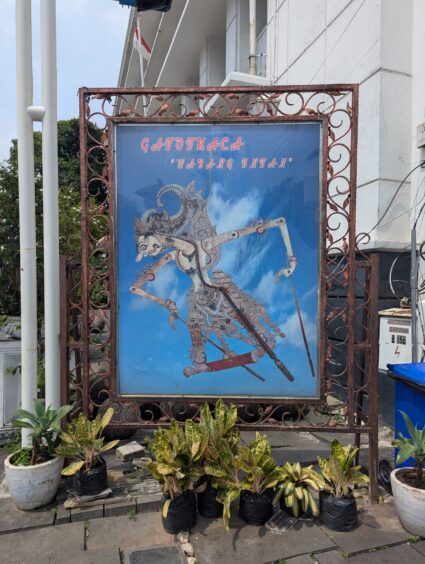
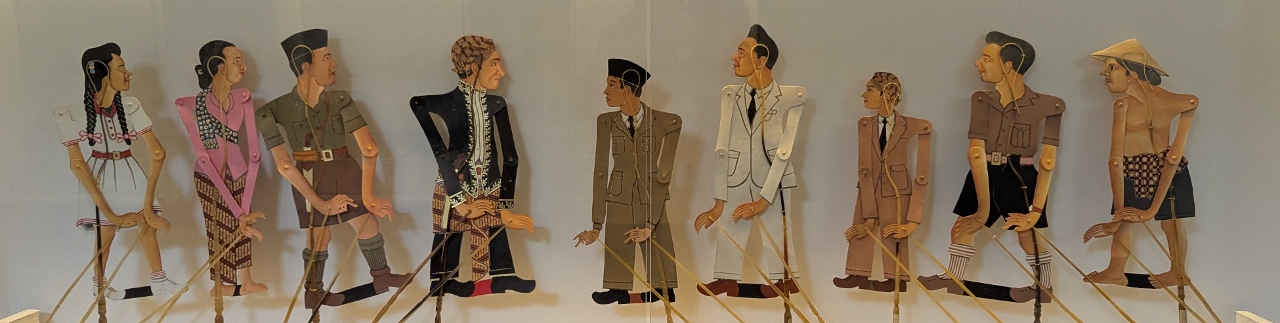
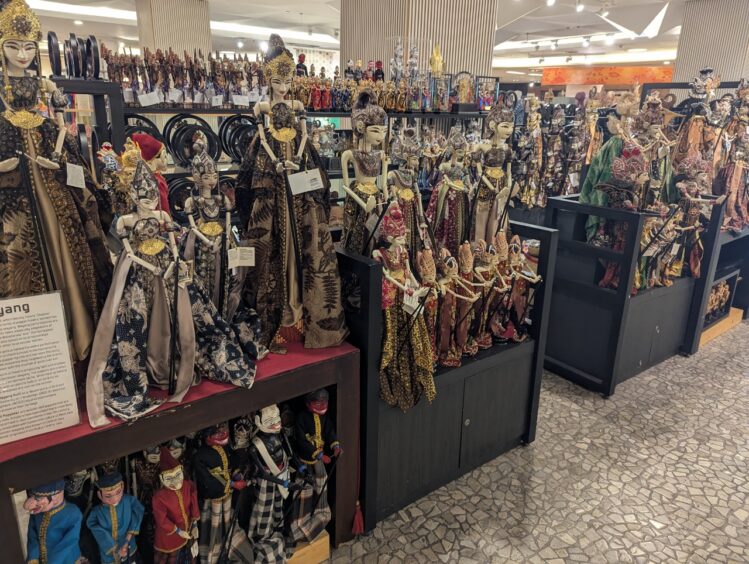
I was most excited to see the Wayang Museum (Puppet Museum) as it brought back many happy memories of seeing shadow puppet performances years ago. It used to be that when we passed through small towns in eastern Java or Bali, there would often be local performances that drew just about everyone in town, it seemed.
I described all this to Steve and Cindy, assuring them they could learn about the different puppets here, but that we’d have plenty of opportunities to see wayang performances later. Sadly, this wasn’t true. In the past ten years since I last visited, the number of performances has shrunk, and it appears to be a dying art, at least in the volume that it used to be. With more competition from modern entertainment options, fewer young people are learning the art and skill of manipulating puppets.
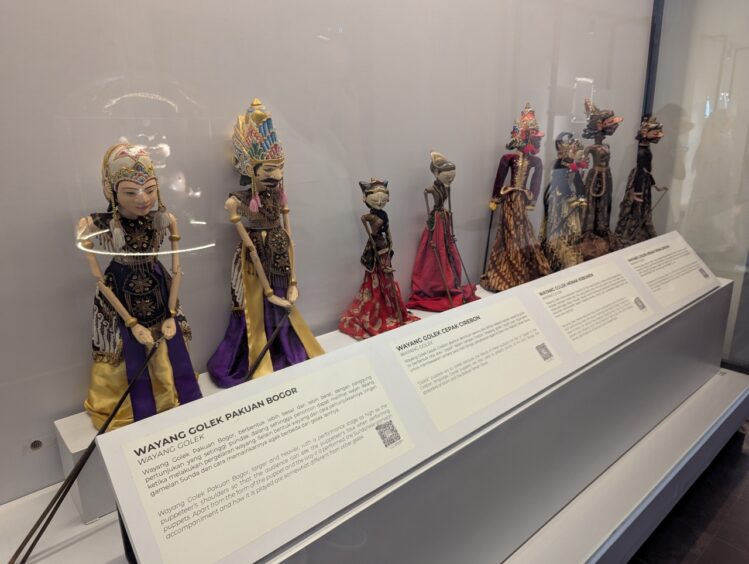
The Wayang Museum has enough space to display many examples of different puppets on two floors, and the interpretive signs are in English and Bahasa Indonesia. There were wayang kulit (flat puppets made from leather) and wayang golek (carved wooden puppets that are operated with rods from below). There are also wayang orang performances by humans as a dance. They have a full gamelan orchestra on display.
Traditionally, epic tales of good and evil from the Ramayana and Mahabharata were acted out over a period of many hours throughout the night, sometimes extending to sunup.
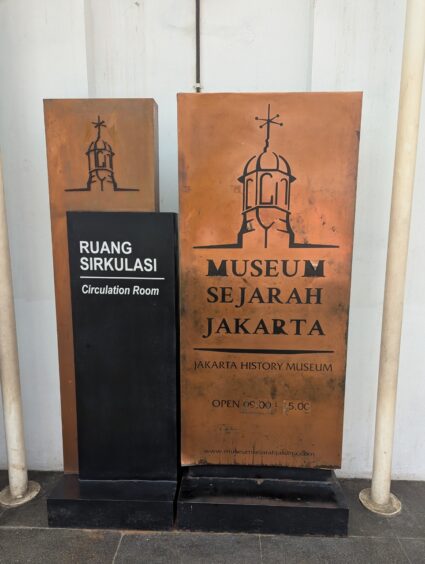
The next museum has so many names. Officially named the Jakarta History Museum (Museum Sejarah Jakarta), it’s also known as the Fatahillah Museum or Batavia Museum. Built in 1710, it was the City Hall of Batavia.
I enjoyed the collection of beautifully carved furniture from various time periods. Maps of Jakarta before all the development were fascinating (it’s built on low marshland). Some objects are from prehistoric times, so the timeframes represented are vast.
Details: The museums are closed on Mondays and public holidays. There is a small admission fee for each museum. The museums face Fatahillah Square. Direct the taxi to Fatahillah Square or Café Batavia in Kota Tua/West Jakarta.
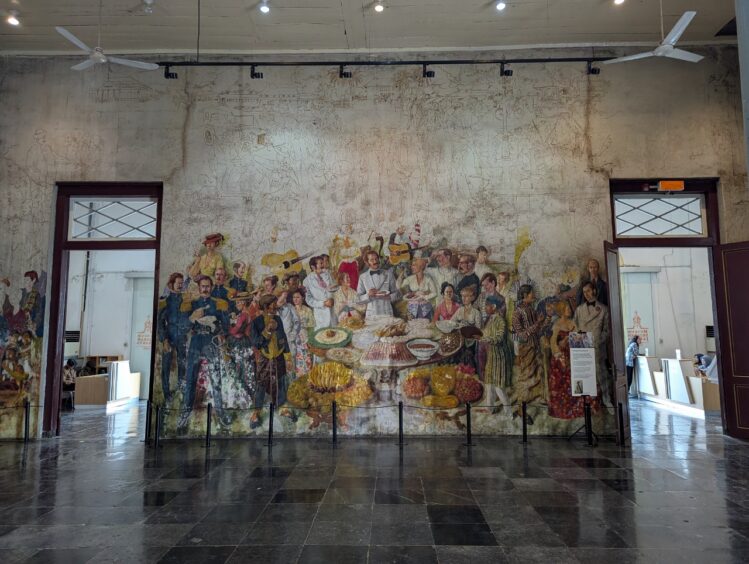
Note that the Wayang Museum had air-conditioning but the Jakarta History Museum did not. We wilted a bit in the latter.
After visiting the museums, we enjoyed lunch at the historic Café Batavia (see “Where to eat” above), and were thankful for air-conditioning.
Most people blow through Jakarta with barely a glance, but there’s even more to do if you have additional days. We only had two days, but if you have one more day, you can get out of the city on a short excursion, and two more days is even better for an overnight outing. I’ve been to all the places listed below on previous trips.
My vote would be a day trip to Bogor Botanical Gardens (Kebun Raya Bogor) (60 miles from central Jakarta; 1–2-hour drive). It provides an opportunity to get out of the city, ascend to high elevation where it is cooler, and get a taste of the lush tropics in a UNESCO conservation area.
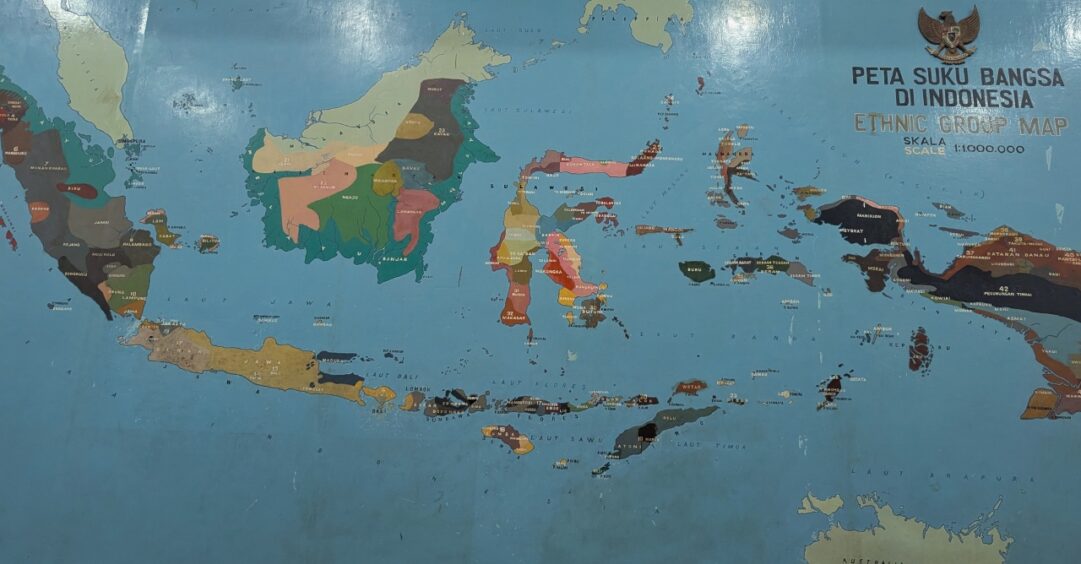
Another option is Taman Mini, an Epcot-like destination in Jakarta with a focus on Indonesian culture. There are pavilions with full-size traditional houses representing each of Indonesia’s 34 provinces, museums, bird and reptile parks, and other exhibits. If you can only visit Jakarta, this is a good way to get an overview of the vast diversity of cultures in Indonesia. It’s even better if you can travel to different provinces.
A trip to Krakatau Volcano (often misspelled Krakatoa) offers a fascinating glimpse at the remains of an 1883 eruption so catastrophic that the ash dimmed the world for years and caused a volcanic winter. The eruption was the loudest known sound in history, heard as far away as Perth (1930 miles away).
The jaunt to Krakatau can be done as a dreadfully long day trip (4 AM pickup), but an overnight trip makes it much more tolerable. It’s a three-hour drive to Carita Beach where you can stay in a hotel or camp. The next day, you can catch a boat for a 90-minute or longer sail across the Sunda Strait. Hiking and snorkeling are popular activities.
Closer to Jakarta are the resorts on Thousand Islands, a chain of over 300 islands (only 13 are developed). Ancol Harbor in Kota Tua (near Fatahillah Square) is the launching spot. It’s a popular weekend getaway destination for Jakarta residents. There are a multitude of hotels, restaurants, and activities at various price points. It can take anywhere from 30 minutes to three hours to reach by boat, depending on the boat and the destination.
Jakarta had one more surprise in store: we didn’t want to leave. For a city we’d talked ourselves into visiting, it had talked us into coming back. Two days in Jakarta gave us exactly the foundation I’d hoped for, and we left as big fans.
 Previous Post