


When planning another trip to Japan, I was excited to finally share the experience with my husband, Steve, who was visiting for the first time. I don’t mind seeing places for the second or third time, but I thought about how to bring a fresh perspective to my experience. We both like to cook so I hit on the idea of making food a central part of our trip, planning food tours and cooking classes while allowing plenty of time for spontaneous experiences.

I’ve found that often, when I book a group food tour or cooking class, Steve and I are the only patrons. This affords an opportunity to get to know our guide or instructor on a deeper level and by the time it’s over, we’re friends for life, communicating on Whatsapp and email. When the groups have been full, it has resulted in a merry multinational gathering where we’ve explored new flavors alongside people from Ireland, India, Taiwan and other places, affording even more international exchanges as we compare foods and traditions to those in our home country.
If you’re not familiar with foods of Japan, see this guide to Japanese food.
See our entire three-week itinerary here.
For our first day in Tokyo, I chose an outdoor activity to counteract the effects of jet lag. Doing a food tour early in our month-long trip was the perfect introduction to foods we weren’t familiar with. The Tsukiji Fish Market Food Tour appealed to me with its mix of walking through outdoor produce and food stalls around the old fish market, even if it was no longer the site of the famous wholesale market. The wholesale operation outgrew the space and has since moved to Toyosu, but there’s still plenty of fish in the old market.
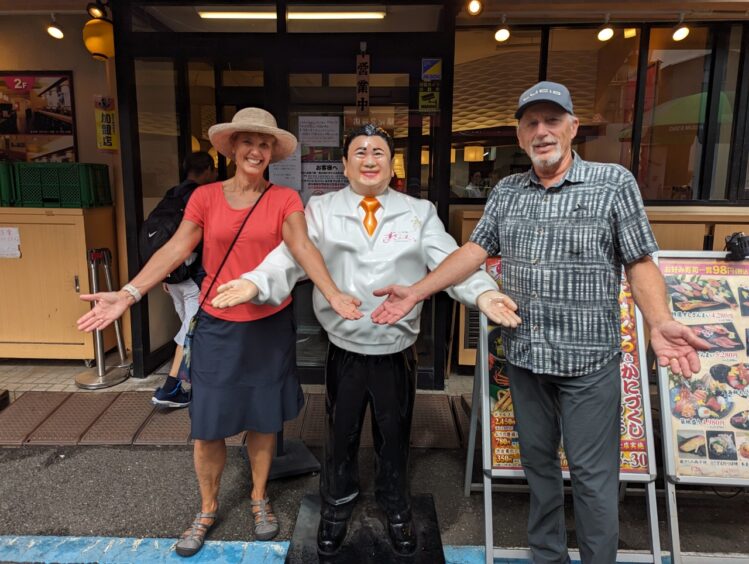
We toured the fresh produce in the outer market, finding large, white daikon radish, deep green shiso leaves, long skinny burdock root, and lotus root.
After observing a busy production line making delicious, faintly sweet, rolled omelets called tamogoyaki, we sampled some. Then a few more, because I was hungry.
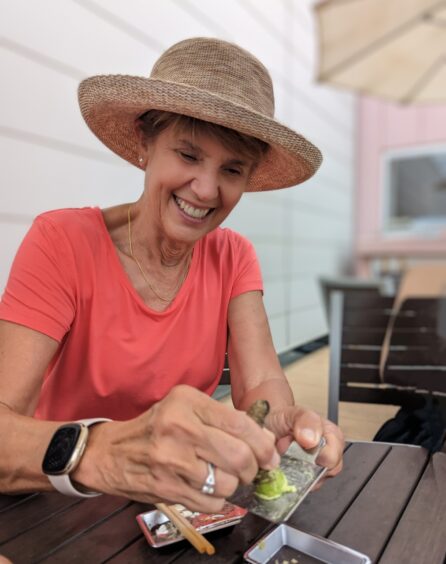
Our guide purchased a green knobby vegetable that reminded me of a pinecone. This turned out to be fresh wasabi. He produced a grater from the depths of his backpack, and I grated some when we sat down for a snack. It tickled my nose in a way that was more pleasing than the horseradish imposter we often get at home. Sampling continued with slices of fresh, raw ahi tuna and grilled meat on a stick. I forgot that there’s often a full meal at the end of food tours.
Some in our group were finishing their trip, on the hunt for matcha tea and sharp knives.
“Unless you’re out of time, don’t buy anything here. Prices are set to take advantage of tourists. Head over to Kappabashi Street, known as Kitchen Street, for deals on matcha tea sets or knives. I made a mental note to visit Kappabashi Street at the end of the month when we were to return to Tokyo.
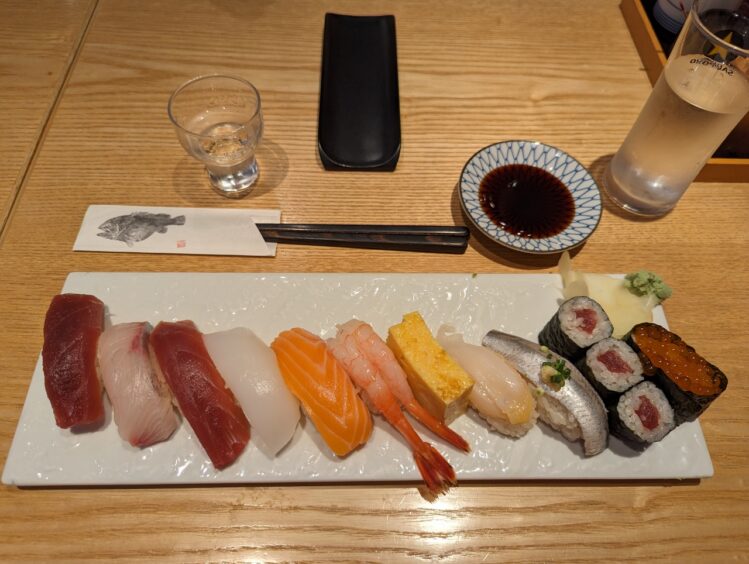
Inside the small wholesale part of the market, we saw lots of fresh fish and gawked at enormous ahi tuna eyes packaged for sale, whetting our appetite for an enormous sushi meal at a nearby restaurant, where we regretted not pacing ourselves to leave more room for the delicious spread.
Link to tour on Cookly.me.
I was strategic in planning several food-related activities because one day of temples and shrines is adequate for me. Also, I find the tourist crowds at the most popular sites off-putting in the extreme. Planning intimate experiences worked well and took us to several lesser-known neighborhoods with few tourists.
My favorite activity on the trip was our cooking class with Bell in her home. After striking out on other apps, I found her on the AirKitchen app. This is a Japan-based food app.
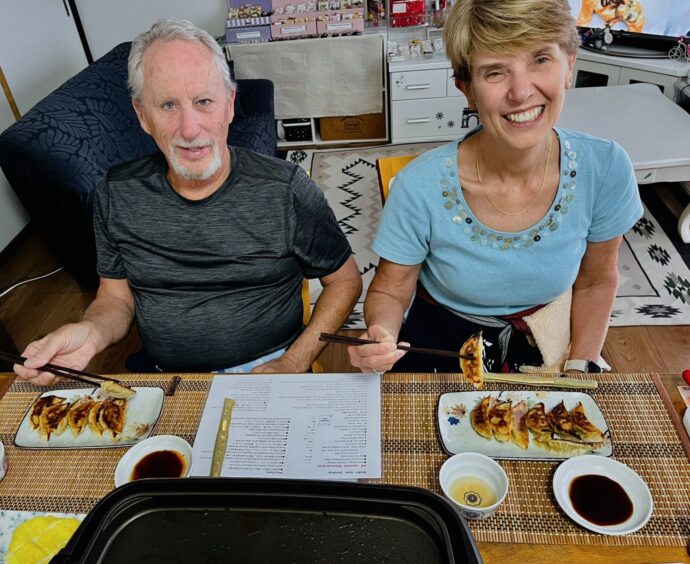
The subway worked well to reach Bell’s house, which was some distance from central Kyoto. She was kind enough to offer to pick us up at the subway station and drop us at the train station at no additional charge.
We made two dishes: gyoza, the popular dumpling that many westerners love, and okonomiyaki, which is like a vegetable-rich omelet.
Bell had prepared and measured some ingredients in her tiny but airy kitchen, which had only enough space for two students. We did a little chopping, which Steve is always better at, being more patient and precise, while I hacked my way through, creating random shapes and sizes. However, I excelled with pinching the folds of gyoza dough while his bigger hands fumbled through, leaving some air gaps.
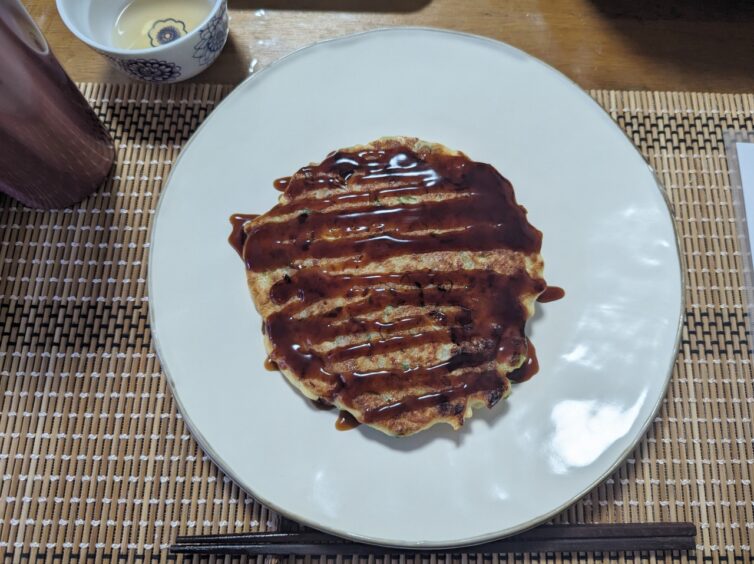
Okonomiyaki was new to me, and I learned there are two styles. We prepared Osaka-style, where cabbage and other veggies are mixed with eggs. Hiroshima-style okonomiyaki involves layering the veggies and eggs, often over noodles. Both are drenched in a thick brown sauce, overly sweet and savory at the same time. It’s like barbecue sauce but the ingredients include oyster sauce, sugar, ketchup and Worcestershire sauce.
I found it interesting that Worcestershire Sauce, created by Lea and Perrins in the 1830s, has wiggled its way into numerous, now classic, Japanese recipes. The sauce was introduced to Japan around 1880 and is sweeter, fruitier and may be thicker.
The most unusual ingredient we used was the mountain yam known as nagaimo. When peeled and sliced, the firm, white flesh resembles yams we see in the US. The magic happens when it is grated. The firm texture gives way to a gooey, slimy mess that is most unappealing to the uninitiated. Mixed with the eggs and cabbage, it binds the ingredients together and keeps it light.
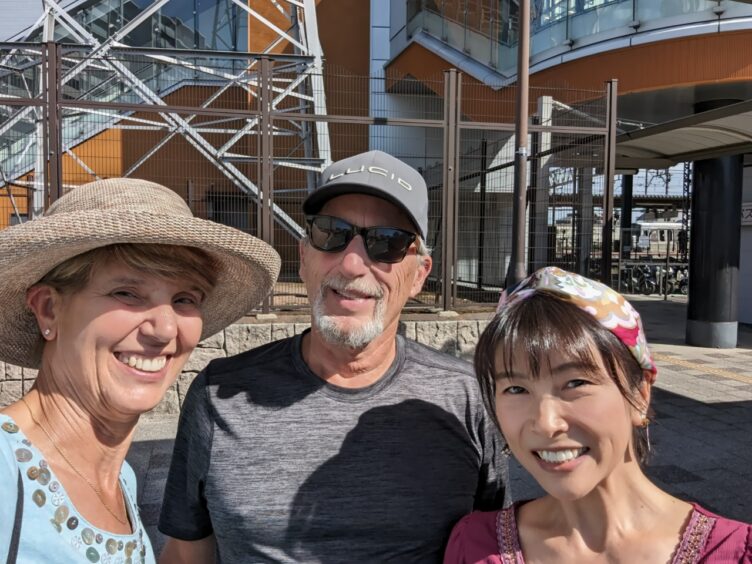
Bell was fun to be with and we had long, lighthearted conversations about all the places we’ve visited—she’s well-traveled, having visited 26 countries and lived in Europe.
Bell can now be found in Aichi, near Nagoya. Find her on AirKitchen and Instagram.
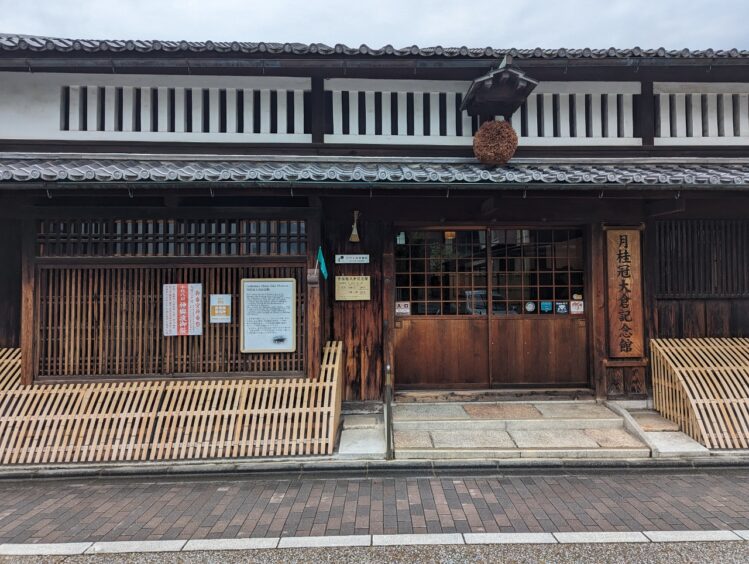
Another highlight of Kyoto was a sake tasting tour at the Gekkeikan Okura Sake Museum. Gekkeikan Sake Company, founded in 1637, is one of the oldest companies, not just in Japan, but the world.
The tour was conducted in the company’s museum in the Fushimi Ward. This site was chosen because it sits on a huge aquifer. The surrounding neighborhood was residential, with a few shops and restaurants—decidedly low key after the bustle of central Kyoto and the intense crowds at the most popular shrines. We took a 25-minute subway ride from Kyoto Station to the museum.
I was looking forward to some warm sake, the way it’s always served to me in the U.S., but I learned is that sake is normally consumed cold in Japan. In the cold winter months, Japanese may enjoy warmed sake, like we might have hot mulled wine. Now I keep my sake in the refrigerator.
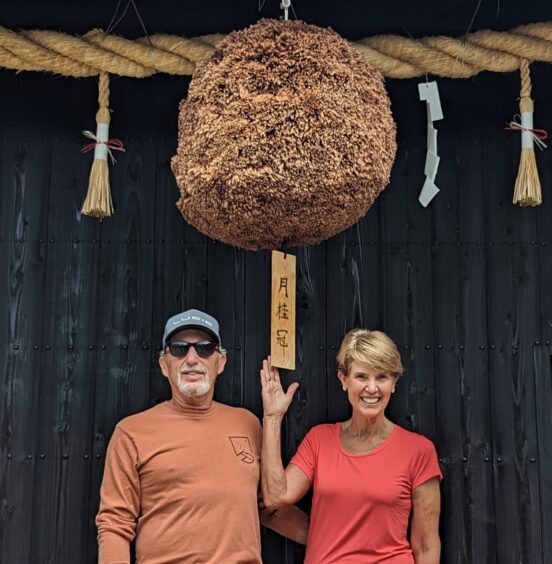
We had seen cedar balls hanging in front of businesses all over Japan. It’s a symbol of sake. At the brewery, the cedar ball is replaced every year in the fall after the rice harvest. Fresh green branches are used to announce the start of a new season. When the ball turns brown, the sake is ready to be drunk. The balls are also hung outside of bars, restaurants and liquor stores to attract customers.
I appreciated the cheat-sheet card with the different grades of sake based on degree of rice polishing and amount of alcohol added. It took many sips to fine tune our decision on our favorite type, daigingo.
I was surprised that this well-known brand has a US division that makes sake in my home state of California, out of Folsom. The brewery executives traveled all over the US sampling different water sources and ultimately chose Folsom for its access to delicious Sierra Nevada water, fed by the American River. I immediately felt a connection that spanned the Pacific Ocean and I always have a bottle of Gekkeikan Sake in my refrigerator.
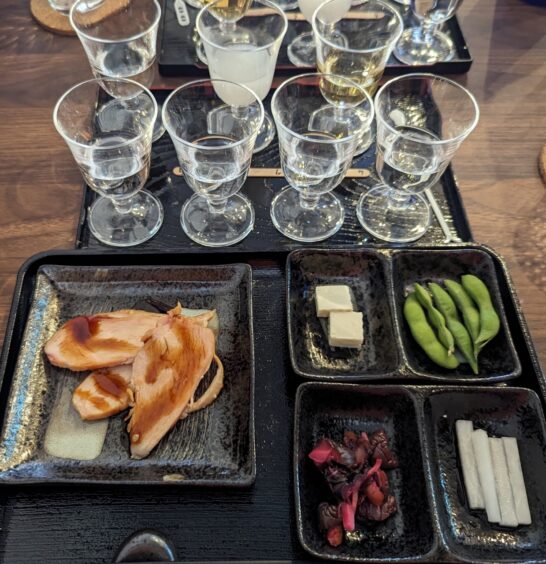
After tasting several styles of sake at the museum, we were led down the block to a small restaurant for a delicious food and sake pairing. Confronted with so many glasses, I knew we were in for a treat. Pretty soon, everything was a blur, but everything tasted wonderful, and once again, our stomachs were pleasantly full, and our minds were whirring to process so much new knowledge.
I booked this tour through Get Your Guide. You can also book tours on their website, but the tour information is in Japanese.
The walking food tour of Gion in Kyoto was different from the one in Tokyo. For one thing, it was a nighttime tour. Instead of the market focus, this one was a tasting tour around the historic district of Gion. Some of my planning backfired. Remembering how full we got on previous tours, I started off hungry at the time we would normally be thinking about dinner. We spent a full hour before we got a bite to eat, and while I appreciated the cultural instruction at the temples, it was a repeat of what we had learned in Tokyo.
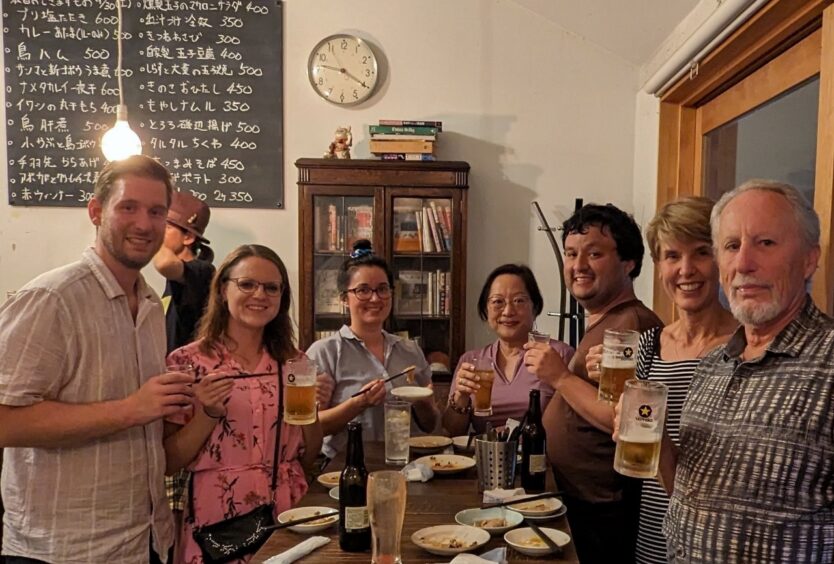
With my stomach rumbling, we approached a sketchy looking establishment with a basement entrance in a dark alley. With only a few seats at the bar, our group eight quickly filled the tiny establishment. From a tiny burner emerged the lightest, most delectable shrimp tempura I’ve ever had, served with sake. I could have eaten an entire platter, but the small offering had to do. Our next stop was upstairs in a popular bar, where more substantial offerings satiated me with such standard fare as teriyaki wings and gyoza—tasty but not memorable. Our convivial group was lively, so we fit right in. It was an enjoyable experience and got us into a neighborhood we might not have visited on our own.
I found this food tour on Get Your Guide.
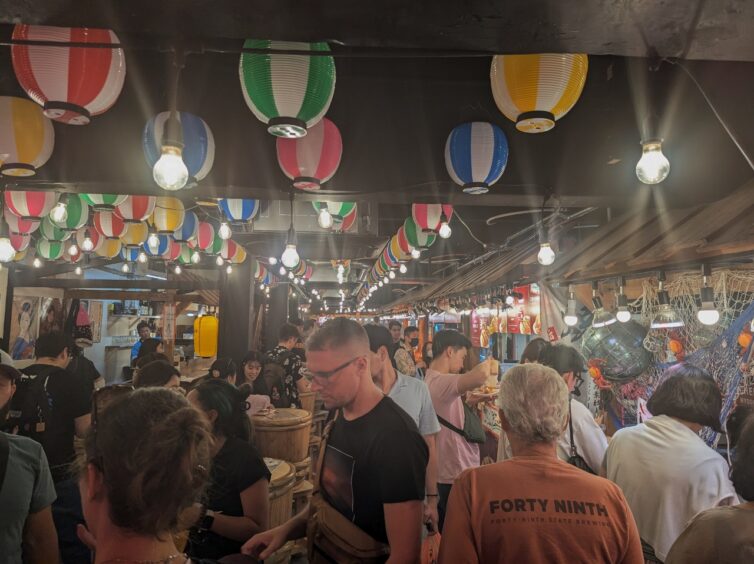
A lowlight of Kyoto was Nishiki Market, the most famous food hall in Kyoto. We found the food in numerous stalls, including sushi, yakitori, tempura and fresh crab, to be of average quality, but I did try takoyaki—doughy balls filled with octopus and deep-fried. They were a little heavy tasting for me but I’m glad I tried them. I also found small plates painted in traditional Japanese style in blue and white. These are my favorite souvenirs. That made it worth the trip to the market.
We left plenty of time to wander in neighborhoods and drop in to small restaurants. Here are some of the best unplanned meals we had.
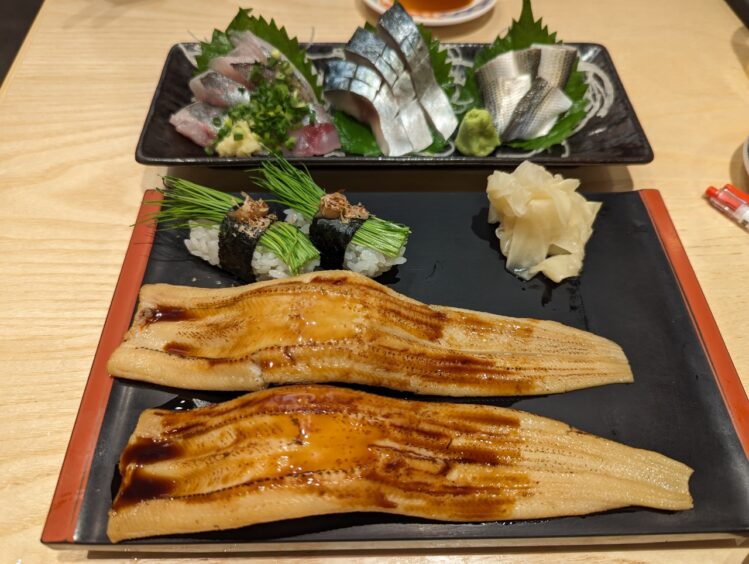
We stayed near the Tokyo Train Station when we arrived and ate an embarrassing number of meals there. Because our internal clocks were off for a few days, we knew we could always find food. Many small izakaya eateries specialize in only one type of food, so the quality is nearly always outstanding. The tempura place served excellent deep fried, lightly battered fish, meat and vegetables. The meal was nicely paced as the chef, bowing his way from the small kitchen, dropped off foods as they were cooked. Nothing grew cold or limp. Our favorite sushi place was at the train station, where sake was served in traditional square wooden masu boxes. Most of the place names were written only in Japanese so I can’t provide names, but all that is needed is a stroll through several floors of the station to find something interesting.
In Nagoya Train Station, we found a noodle place that served kishiman noodles, which originated in that town. They are typically served in a broth soup like udon, but the noodles are flat.
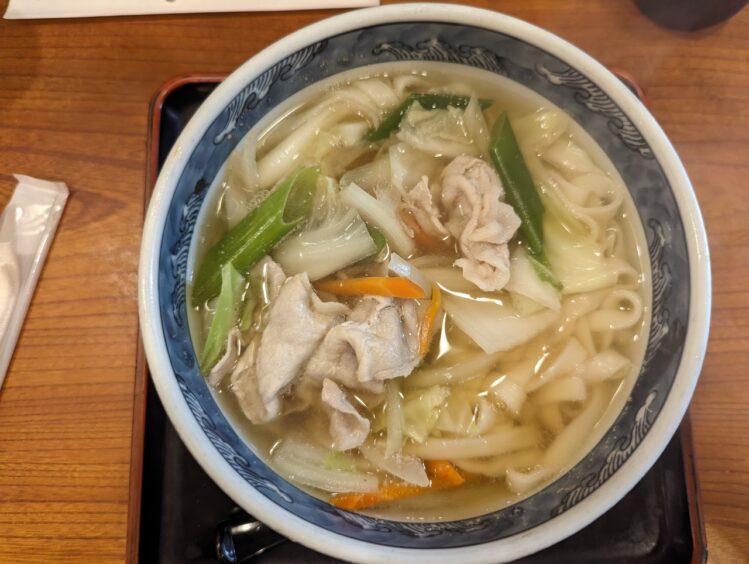
Another day, we waited in short line (all others had very long lines) for an excellent meal of steamed black cod pickled in mirin kasu (mirin lees), perfectly cooked with crispy skin).
In Sapporo, on a crisp but sunny day, we wanted to stretch our legs after a day-long bullet train ride from Tokyo the day before. The mile-and-a-half walk from the Sapporo Train Station to the Sapporo Brewery was perfect, and we enjoyed the self-guided brewery tour and tasting.
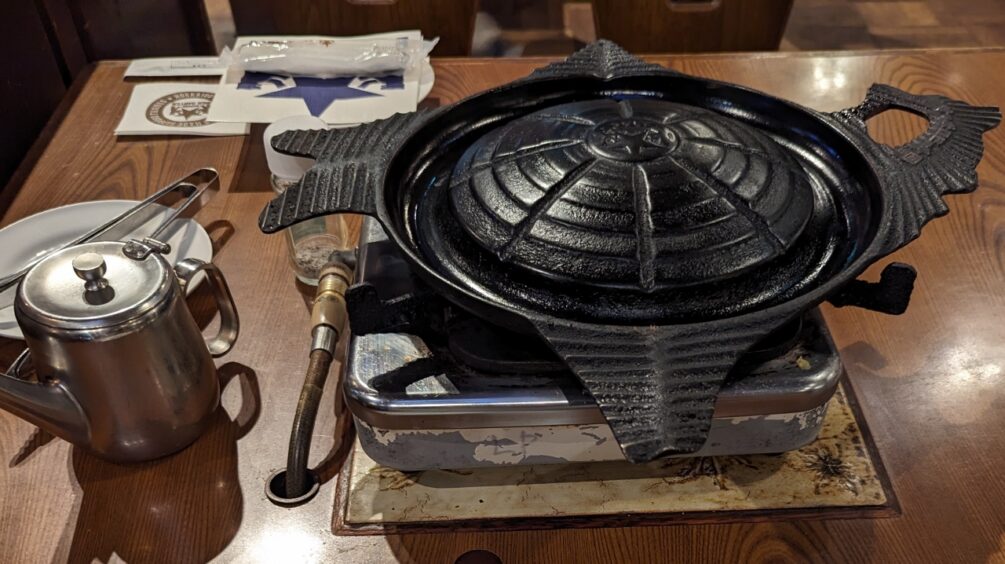
The best part was the meal next door at the Genghis Khan Hall, where we sampled a famous Hokkaido dish called Genghis Khan (orJingisukan). Thought to have originated in Northwestern China, the more practical explanation is that there were a lot of sheep after the Japanese government encouraged expansion of sheep farms. The unique thing about how the communal meal is prepared is the rounded dome of the grill. Strips of lamb are laid over the high point of the dome, releasing fats that drip down, flavoring the vegetables laid around the base.
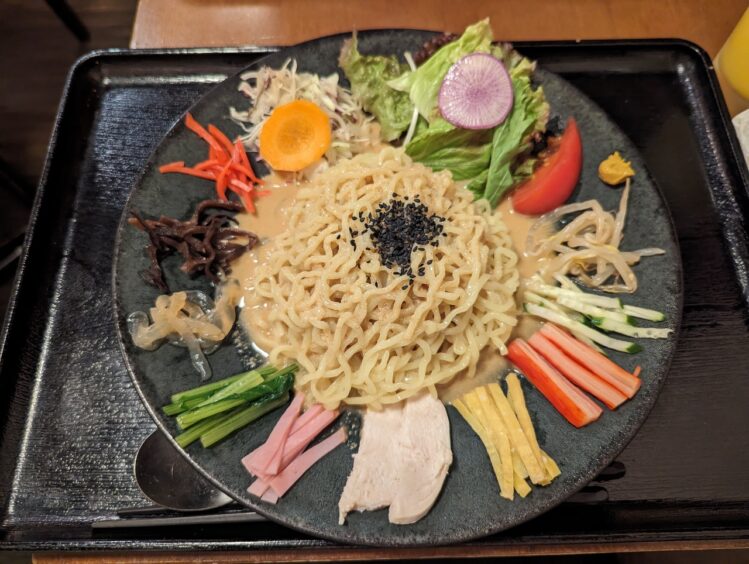
Japan is a fantastic place to eat on purpose and also eat accidentally. We planned a few tours and classes, then let the rest happen—train stations, tiny noodle shops, a grilled lamb feast in Sapporo. If you’re going, don’t stress about perfection. Book a couple of experiences, show up hungry, and let the delicious surprises do the rest.
See all my Japan articles here.
A Week in Hokkaido
Tokyo
Kyoto
Other Food Highlights
Useful Apps
 Previous Post