


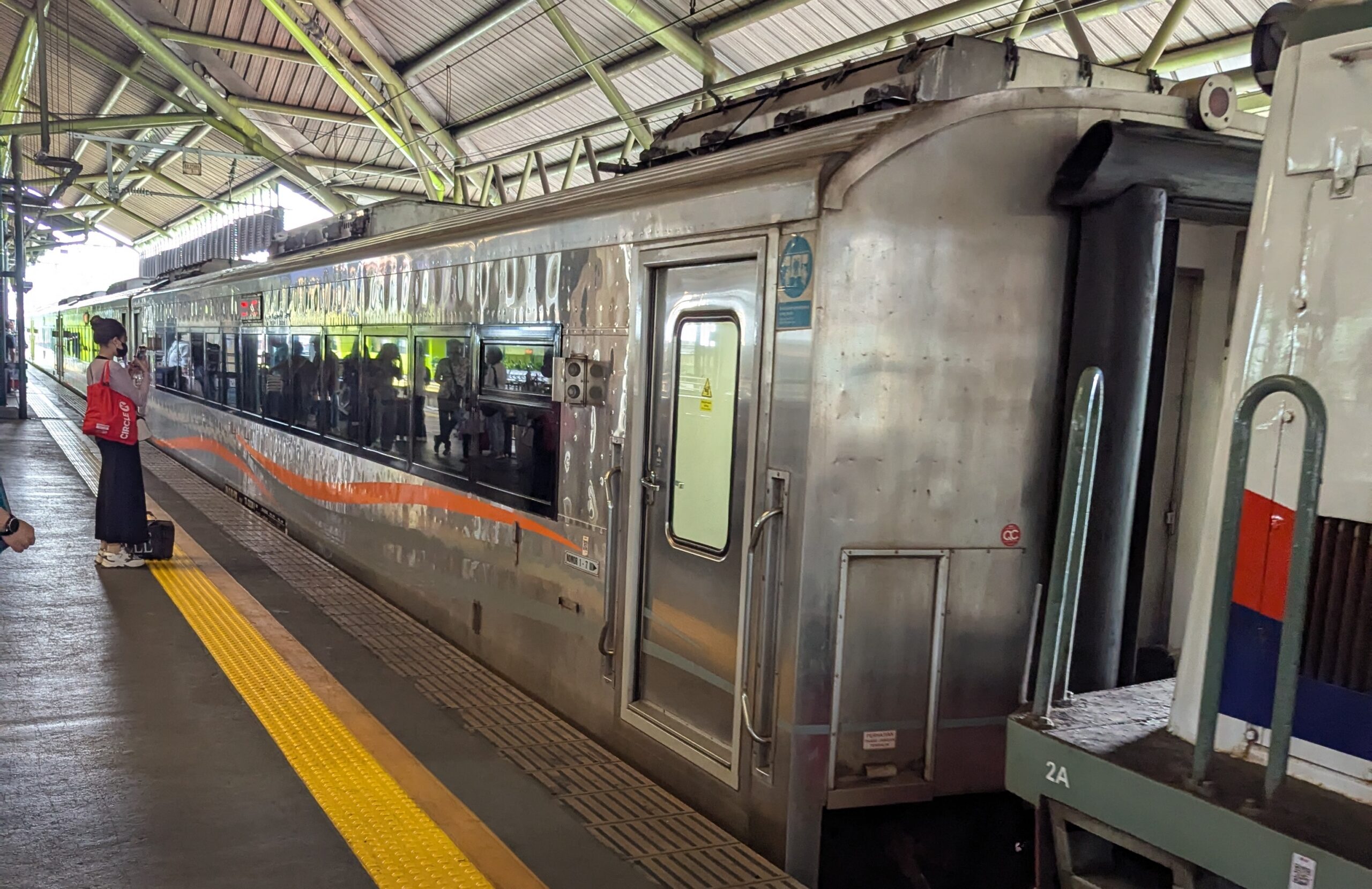
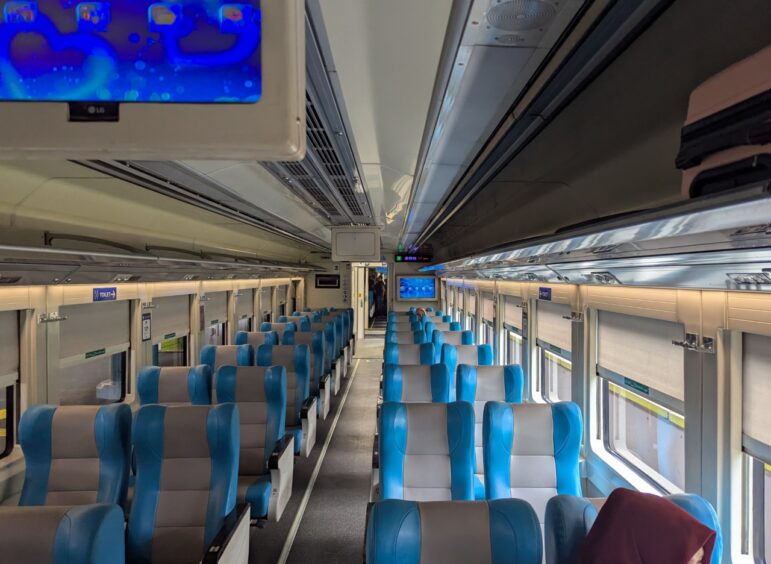
The train swayed and the wheels clacked as we pulled out of Gambir Station in central Jakarta. Gradually, the gloss of prosperous commercial buildings gave way to a lower profile, both in form and affluence. Structures flattened and paint peeled as vendors shouted and vehicles pressed forward with all the speed of a tortoise in the constricted streets. On the edge of the largest metropolis in the world, the air cleared and pastoral scenes of rice paddies and clumps of banana trees reminded me that we were in the tropics. Traveling from Jakarta to Yogyakarta by train brought back so many memories of train travel in the 1970s.
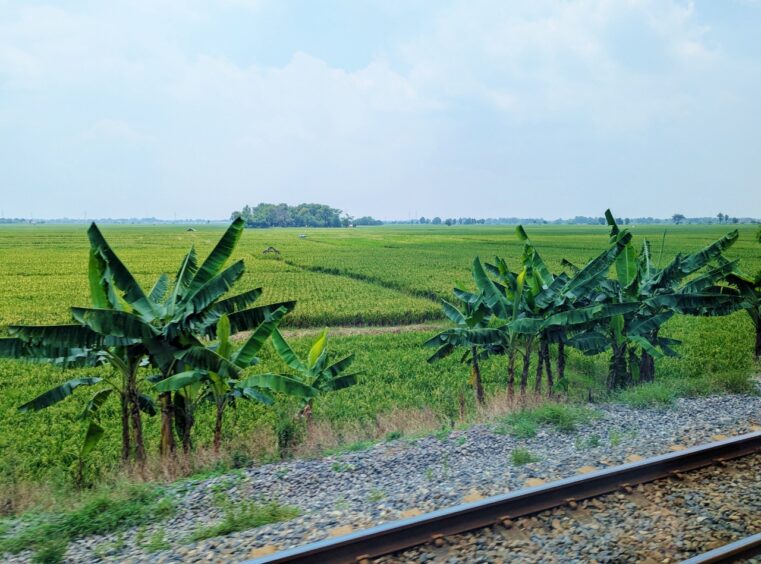
I was traveling from Jakarta to Yogyakarta with my husband and best friend. While a quick flight would have been efficient, we were interested in experiencing the transition between the two large cities in a slower way. Rather than thinking of it as a wasted day, we looked forward to the time for reflection to absorb what lay between. While Jakarta had modernized greatly compared to my memory of it, the space in the middle was largely the same. I was impressed to see that the standard of living appeared to be improved for many, even as the traditional way of life in the fields had been retained.
See my article on Jakarta, where we boarded the train.
Our journey started at Gambir Station, located at the edge of the National Monument (MoNas) in downtown Jakarta. Expecting chaos, we were surprised to find a calm, orderly environment in a modern building. It was easy to purchase tickets, stroll around, and pick up snacks.
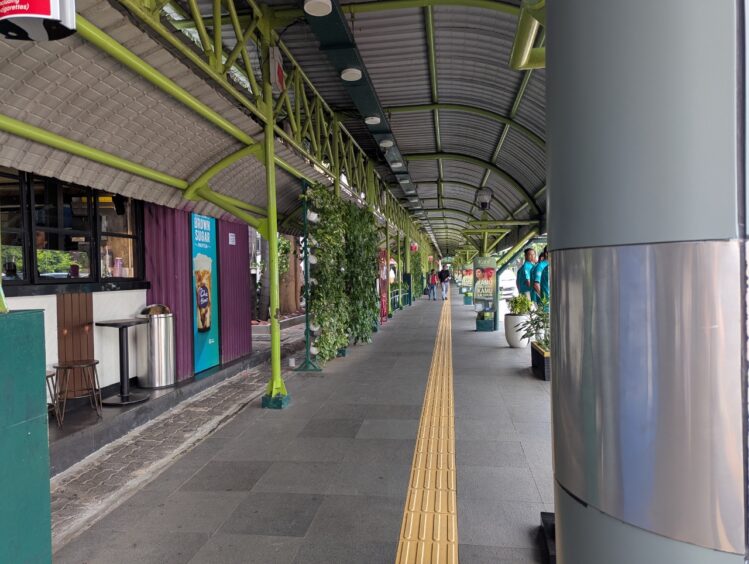
After trying unsuccessfully to purchase tickets online, we took a taxi to the station. It was on the way to other attractions and we purchased tickets in advance. It can be notoriously difficult to get US credit cards accepted. Our preliminary tour of the station was reassuring.
Though Jakarta is an enormous city of 41 million people, urban trappings shifted to traditional small farms quickly, and I marveled at the contrast of the rice paddies with all the open space. As I stared out the window, drinking it all in, movement in a paddy caught my eye. I noticed conical straw hats bobbing up and down as farmers harvested the grain.
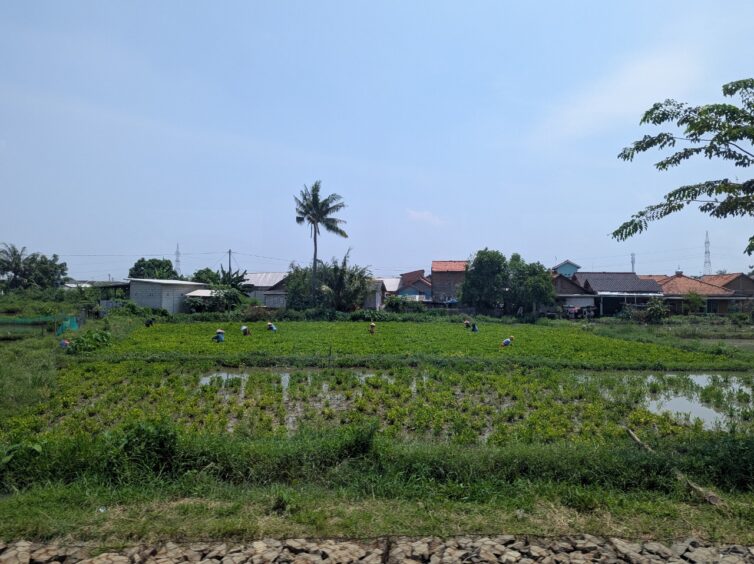
If we had flown from city to city, it would have been easy to forget that Java is still an agricultural powerhouse. They still have more land devoted to tiny, family-run farms than urban sprawl. Packed mud levees provide convenient walkways between the flooded or dry paddies.
Our six-hour ride took us east through Cirebon before dropping south to Yogyakarta. I noticed more small plots planted with mango, coffee, and papaya trees, and the vegetation grew thicker. The flat terrain became more varied as we cut through a rugged section notable for the streams tumbling down rocky outcroppings among dense vegetation. I got a sense of rocky uplift as we passed through the central spine of Java, even though clouds hid Mt. Slamet’s 11,246-foot summit. Deep folds, gorges, and lush hills beckoned, but the train rolled on.
I thought back to a similar train ride across Java when I was in my twenties leading a recalcitrant group of friends across Java to Mt. Bromo. Having traveled through Taiwan, Singapore, and Jakarta, we were travel-weary from many days on the road. We hadn’t realized our third-class tickets didn’t guarantee an actual seat. By the time we boarded, every seat was filled with Indonesians who gawked at us as if we were from outer space.
Hoping someone would get off at the next station, I clung to my small space next to a pole I could hang onto. At each station, more people flooded in, pushing me back further and further. The heat rose at the same rate as tempers as bags of grain and root vegetables were loaded into the compartment. Feeling sharp pricks in my legs, I looked down to see chickens pecking at my kneecaps through a wicker basket. I groaned, my sense of adventure dulled.
Now, I appreciated the luxury of the new-ish seats—I had a seat all to myself—and the so-called air conditioning of our Executive Class compartment that barely lived up to its promise. It was a vast improvement over that third-class train, but I wouldn’t trade the memories from that trip for anything. (If you’re interested in reading more about that trip, I have a chapter devoted to it in my book, Between Worlds: An Expat’s Quest for Belonging).
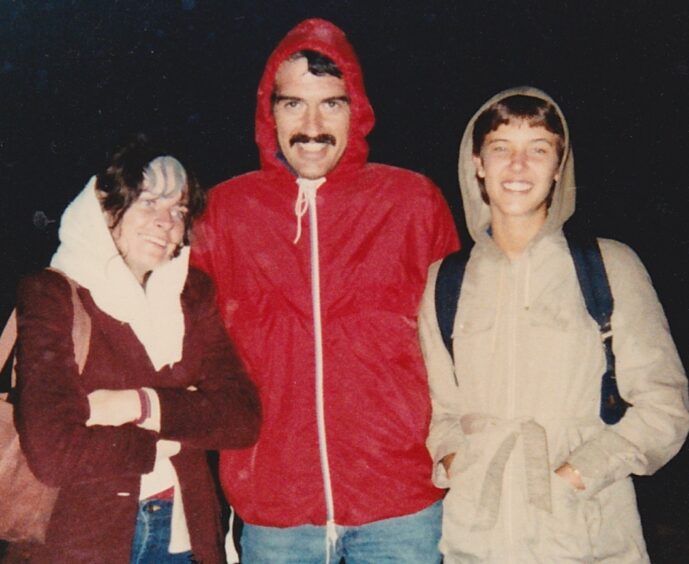
Back then, with the flush of youth, we crammed four of us into a single room in rustic accommodation. Rising in the black of night, we hoped to see the sunrise from above the molten lava. First, however, we rode horses in the rain, walked across the surreal Sea of Sands, and mounted 100 uneven stone steps. Sulfurous steam rose from what seemed to be the center of the earth. The elusive sunrise never materialized through the thick clouds, but the experience was still magical.
This time, minor but persistent health issues that slowed me down thwarted our plans to repeat my trek. It’s annoying to face the realities of aging bodies. Though I was disappointed, I learned that my traveling companions were more than willing to give up the strenuous hike. We modified the plan, choosing to spend extra time in Yogyakarta instead. I ended up appreciating the slower pace in Yogyakarta. We enjoyed time at the pool, and relished the unexpected trip to Mt. Merapi, another volcano.
Gambir Station had a wide variety of fast-food outlets, bakeries, and convenience stores.
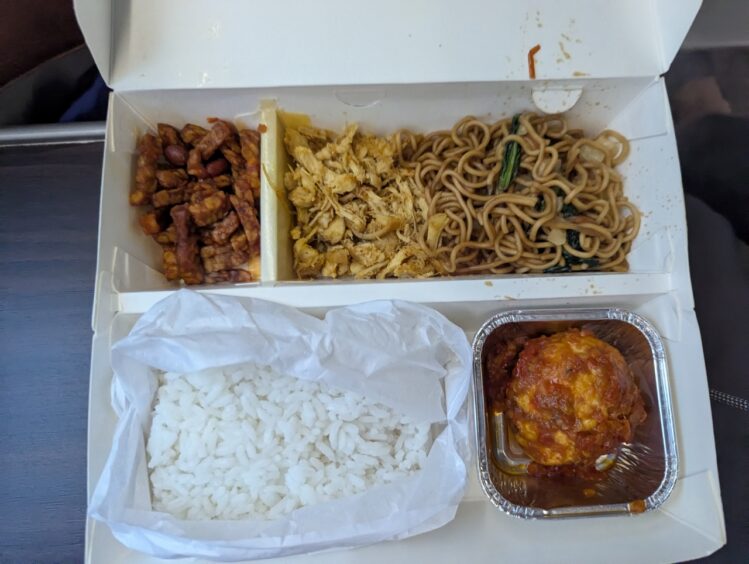
We bought some snacks to bring with us, but carriage attendants came through the compartment with snacks for purchase, and there was a dining car. Wanting to stretch my legs after hours of sitting, I strolled through several compartments until I found the small cafeteria. The chicken curry with rice, tempeh, roasted peanuts, and a big, hard-boiled egg was delicious.
After being lulled into a trance by the motion of the train and mesmerized by the views, it was hard to focus when we pulled into Tugu Station, an attractive Art deco building dating from the 1880s. The station is conveniently located in the Malioboro area that is popular with tourists. Not wanting to be in such a hectic area, we needed to find transportation. I had been using the Grab app, but found it more convenient to drop into a Bluebird Taxi, a trusted brand, with a persistent driver.
The 20- to 30-minute drive from the station to Rumah Mertua Heritage Hotel in the Ngaglik District was nothing when we traveled from the train. However, it got repetitive when we traveled this route once or twice every day. For those wanting to maximize their sightseeing time, I’d recommend staying in the Malioboro area.
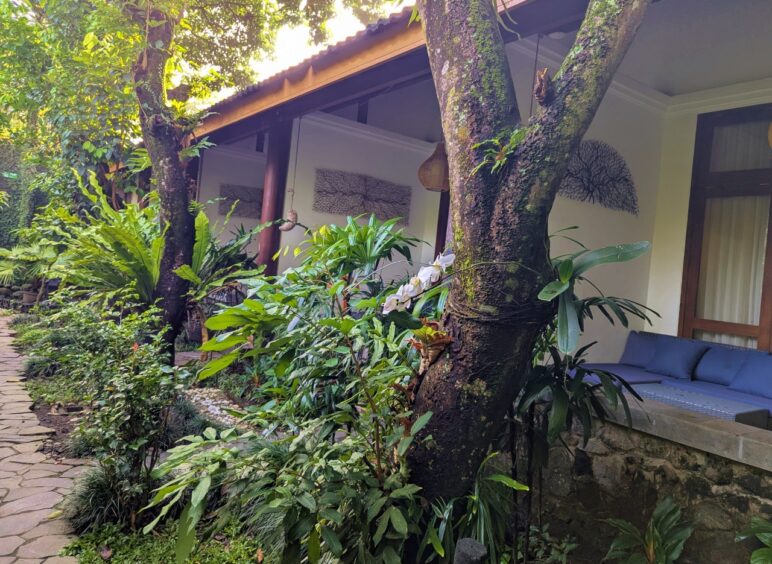
Arriving at night, driving through darkened narrow lanes made me apprehensive, but once we found the hotel, I appreciated the traditional Javanese rest house design. It brought me back to the days when western hotels were rare in Indonesia and my budget was limited. The lush tropical garden was an oasis, and the pool with spouting carved stone monkey statues was delicious. The room, equipped with a modern bathroom and air-conditioning, felt luxurious once we disposed of the very large quantity of mothballs stashed in the armoire. Blocks of three or four rooms each featured a porch, where we enjoyed viewing the curtain of monsoonal rain that dropped down briefly every afternoon, watering the tropical foliage.
Since we had a relaxed schedule, we grew to appreciate the quiet nature of the village-within-a-city with its nearby soccer field where kids played nearly every day, chickens roamed free, and low rooflines created an open feeling. We felt safe strolling around the neighborhood and found a convenience store nearby. We were thankful no mosques were located nearby so we could sleep through the 4:30 AM call to prayer.
The included breakfast was good and could be served on the porch, but we chose the outdoor covered dining area. The menu was adequate but limited for other meals and unexpectedly bland.
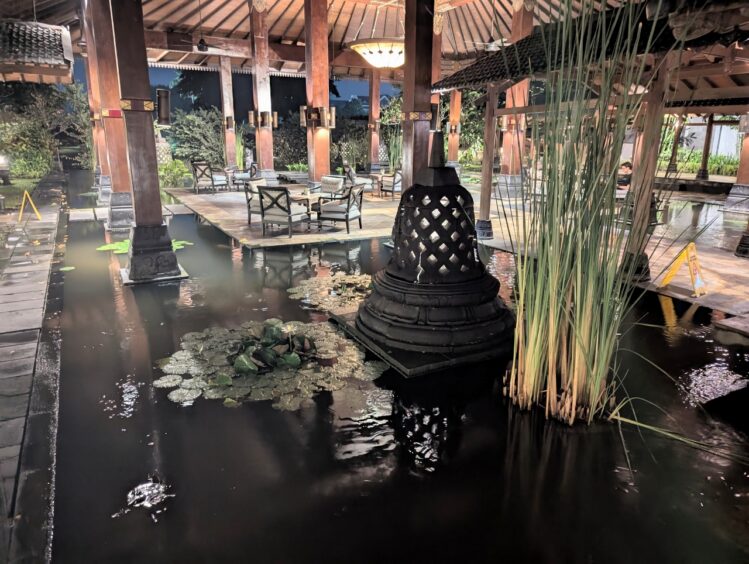
We discovered that the Hyatt Regency Yogyakarta, set on a lush 22-acres, had a wonderful restaurant in an upscale tropical setting. After that, we discovered the lovely Sasanti Restaurant next door, which became our favorite for delicious Indonesian food.
Gambir Station: We had passed by several times, and after hitting roadblocks trying to purchase tickets on the official KAI website with our US credit cards, we elected to drop by on a downtown excursion. It was easy to purchase tickets in person. We chose Executive Class tickets.
In travel forums, people often recommend the Traveloka app for foreigners who wish to purchase online. Tickets go on sale 45 days in advance. I have not used the app myself.
Traveling from Jakarta to Yogyakarta by train was everything I had hoped it would be. Executive class offered comforts I didn’t dream of back in the 1970s. Slow travel allowed time to reflect and absorb transitions between cities and time.
Wondering how to organize your trip to Indonesia? See Beyond Bali: Your Indonesia Island Itinerary Guide.
 Previous Post