Stanford Rock Hike

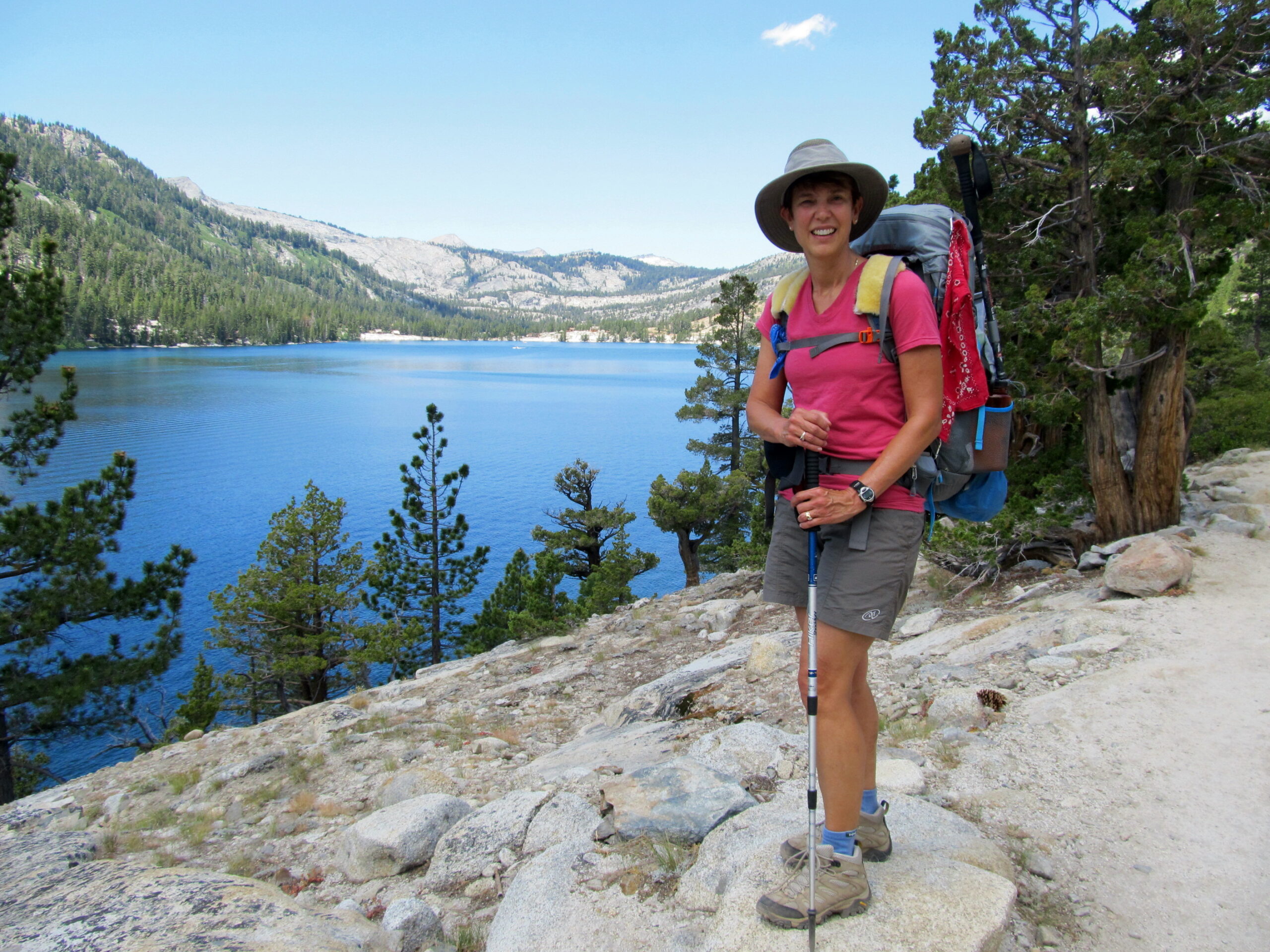
Lake Tahoe-View from the hike

The heavily forested Stanford Rock hike, located in Ward Canyon is a rigorous 11 mile loop that rewards the hiker with stunning views of Lake Tahoe, Twin Peaks, Alpine Meadows and many other surrounding peaks.

Trailhead
The trailhead is located on Ward Creek Blvd. The trailhead has an obvious parking area in front of a fence, a metal gate and some signs prohibiting campfires, but no other trail markers.

Trail Up
The trail begins beyond the metal gate by crossing the shallow Ward Creek. Boards have been placed across the creek to ease passage but it would still be crossable by rock hopping. The main trail follows a right hand junction immediately after the creek. The trail ascends fairly quickly, like most Sierra hikes, quickly gaining elevation along an old logging road, meaning that it is wide and apparent. Fairly soon the hiker is rewarded with peek-a-boo views of Lake Tahoe, portending better views at higher elevation.

This year, with the heavy snows of the El Nino winter just recently thawed, a lush meadow was brimming with wildflowers in mid-August, looking very much like spring. It beckons the hiker to enjoy a picnic but is too soon in the hike to take a long break so the ascent continues.

Beyond the meadow the views to the east become more pronounced and when it looks like the trail is topping out some social trails to the left lead the hiker to an opening in the forest with unobstructed views of the lake, Blackwood Canyon, Ellis Peak, Rubicon Peak and the distant, still snow-spotted peaks of the high Sierra. South Shore and the ski-runs of Heavenly Ski Resort are also evident. This makes an excellent spot to enjoy a snack or lunch, but the ascent has not really topped out.

After some relatively level hiking the trail curves toward the west and begins ascending again as it skirts Stanford Rock, the rock itself not noticeable until the end of the hike as one looks back at it. The views eventually become oriented toward the north, as glimpses of far-away Tinker’s Knob and High Camp at Squaw Valley and the closer slopes under the Lakewood Chairlift at Alpine Meadows come into view.

Trail Down
A bit before the junction with the Tahoe Rim Trail (TRT) the trail comes to a promontory with spectacular views of the jagged Twin Peaks and surrounding steep cliffs of Upper Ward Creek Canyon to the west leading to Ward Peak. For the backcountry skier these cliffs are accessible in winter by skiing down the west ridge of Sherwood Bowl, approached by a hike from Summit Six Express chairlift, and skiing out of the ski area boundary (Alpine Meadows and the US Forest Service maintain an open boundary policy—ski at your own risk).

After a short distance, perhaps a third of a mile, the junction with the TRT is reached, with a sturdy wooden trail marker. The Stanford Rock Trail descends into Ward Canyon on the TRT, as marked on the trail marker, on a right hand turn. A steep descent through Douglas fir and Tamarack woods gives way to wildflower-filled seeps, creeks and fields of mule’s ears, again heralding spring in August. Lupine, Columbine, Indian paintbrush and delicate purple Marsh Mallows were abundant.

After passing a good sized waterfall and crossing a sturdy bridge the hike out is easy along an old graded logging road. The trail ends at the TRT trailhead, marked with a large sign. Walk approximately one half mile down the paved Ward Creek Blvd to reconnect with the parking area at the start of the hike. Then take a well-deserved break and celebrate your successful hike on the lakeside deck at Sunnyside Steakhouse and Lodge.

Information:
The trail is clearly marked on the Lake Tahoe Trail Map(www.adventuremaps.net)

Available at Alpenglow Sports
415 N. Lake Tahoe Blvd
Tahoe City, CA
530-583-6917

www.alpenglowsports.com

Trail is open to mountain bikes and is marked double-black diamond on the map.

Getting There:

  • Take Hwy 89 South from the “Y” (town center) in Tahoe City, drive 2.25 miles on the West Shore.
  • Turn right at William Kent Campground; continue on Pineland Drive, then Twin Peaks Drive (follow the yellow center line) onto Ward Creek Blvd. The trailhead is located at Road 15N35 (not marked).
  • The trailhead is approximately 1.3 mi from William Kent Campground on Ward Creek Blvd.

The call of the Pacific Crest Trail

Tiffany & Aron at the midway point of the PCT

“Those two are thru-hikers,” said Billie, as she was giving us an overview of Drakesbad Guest Ranch at check-in. I listened with half an ear as I gazed at the lean and sinewy young couple scarfing down a big lunch of sandwiches, soup and salad, my mind whirring. After Billie finished our orientation, pointing out trails to hot pots and other volcanic features, I ambled over to Tiffany and Aron and peppered them with questions about their time on the trail.

PCT trail marker near Drakesbad

Thru-hikers hike all 2,650 miles of the Pacific Crest Trail (PCT) in one season, a four-six month sojourn from Mexico to Canada, approximately tracing the spiny peaks of the Pacific Crest over the Sierra Nevada and Cascade ranges. Section hikers break the trail into sections and tackle one section at a time, sometimes taking years to complete the entire trail. In an average year 300 hikers start in Mexico but only about 180 complete it, succumbing to the daunting distance, fatigue, injury, boredom, loneliness or other reasons. It takes an immense amount of planning, sometimes involving 6-8 months worth, in addition to physical and mental fortitude, to tote a pack and pound the trail for that distance, and I was fascinated to have the opportunity to talk to these two travelers at the half-way point.

Leaving them to enjoy their meal I gave them a break, then returned for a long chat, sitting in the comfort of the shaded picnic tables outside the dining lodge. When they finally pulled away to get a hot shower before hitting the trail to put some late afternoon miles under their feet I was enchanted. Though Tiffany and Aron had just graduated from college and had the strength of the young, Ed, Billie’s husband and co-host of Drakesbad Guest Ranch, came by while delivering some calorie-boosting dessert for the hikers and told us of 60 and 70 year old thru-hikers (in addition to some 9 and 10 year olds). That got me thinking about my husband, Steve’s, and my boomer bodies and whether we could pull long distances.

Peter Grubb Hut on the PCT near Castle Peak

The last 3 weeks have, by chance, put us on sections of the PCT that we’ve never been on before, and it started feeling like some kind of sign, though we’re not usually prone to reading Tarot cards.  First, we hiked a section of the PCT from highway 80 to the Peter Grubb Hut in a failed attempt to get to Paradise Lake, our trip aborted due to excessive snow. We heard about and read the hut journal of two thru-hikers from the UK who expressed happiness at being able to sleep in the hut the night before, complaining in the journal about too many nights in the snow, despite the late June date.

PCT trail marker near Meadow Lake/Mt Lola

The next weekend we attempted to get to Meadow Lake and encountered the same difficulty with deep snow. After almost getting stuck in our off-road vehicle we got out and were tromping around in the deep, sugary snow when I spied a slim trail disappearing into the thick forest. I turned around and found the other end and saw the PCT trail marker. A little seed was planted in my mind about linking the Castle Peak section to Jackson Meadows.

This weekend we found ourselves at the Drakesbad Guest Ranch on the eastern slopes of Lassen National Park, and just before we arrived at the ranch we saw the PCT trailhead and looked at each other with surprise. The PCT once again!

Notice Tiffany and Aron's tiny packs

Tiffany and Aron, who hail from San Francisco and go by the trail handles “Darko” and “Passant”, have been on the trail for about 3 months, and are amazingly in synch and considerate of each other, laughing and reminiscing about milestones on the trail. Their packs were feather light at under 20 pounds each. My pack on a weekend or weeklong trek weighs in at 30-35 pounds so I have some work to do to trim down. They explained that they invested heavily in high quality ultra-light equipment, often sourced from small, independent suppliers who manufacture equipment not normally found at large, chain outfitters. They use a 34 oz Rainbow Tarptent that functions well except in high wind, they said, carry a sleeping bag and secured a unique wood burning camp stove, called a Bushbuddy, to save on the weight of fuel canisters. Tiffany looked fresh and clean while Aron looked reasonably clean, but a bit trail worn as the straps of his pack were wearing holes in his shirt and his stubble of facial hair gave him a weather-beaten look.

We learned of the generosity of trail angels, who set out water, food caches, rides to towns and trailheads. Generous souls like Ed and Billie, welcome thru-hikers at any time of day and feed them until they burst, offer a hot shower with fresh towels and a bar of soap (Tiffany jumped at the opportunity, while it took a little nudging for Aron to succumb), provide laundry services and information about the next section of trail and people to look up along the way who will take care of them.

Drakesbad PCT hiker's journals

Seeing Tiffany writing in a journal, I learned that Ed keeps a notebook for the thru-hikers to sign. Thumbing through it later I saw numerous grateful entries extolling the virtues of their bighearted hosts. “Cliffhanger” and “Milk Sheikh” told the tale of hiking from Mexico to Mt Whitney, then flipped up to Dunsmuir, near Mt. Shasta, to reverse directions to alleviate the snow hiking, fell in a creek and said, “A hug from Ed was a day changer.” Rees Hughes said, “I’ve been hiking the PCT for 29 years and this place is extraordinary.”  “I feel like I’ve died and gone to heaven,” from Wander pretty much sums it up.

Keeping up our PCT theme we picked up A Thru-Hiker’s Heart, Tales of the Pacific Crest Trail at the Drakesbad store, an account of a PCT journey by 60 year old Ray Echols. This is providing an introduction to some of the lingo of the PCT, a set of vocabulary that is as unique as any other specialized group, such as sailors, mountaineers or SCUBA divers. ANZ, zero days, slack-packers and other new words started rolling around in my mind. ANZ, short for ANZPCTKO, is short for Annual Day Zero Pacific Crest Trail Kick Off, a gathering for the year’s group of thru-hiker hopefuls at the California-Mexico terminus. Zero days are rest days, or days with zero mileage. Slack-packers are those who hike for a day or more without their packs, either stashing them and backtracking, or if they can secure separate transportation for their pack.

Drakesbad PCT hiker's journal

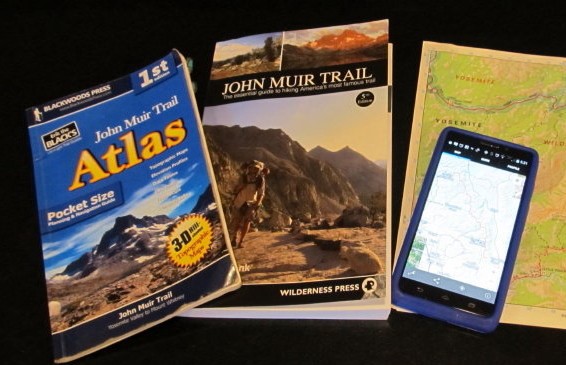
Hearing about 60 and 70+year old thru-hikers inspired us, and learning about the strategies that make an undertaking like this possible make it seem like an idea that isn’t as outlandish as I once thought. Who knows what we’ll do with these thoughts, but this is how we started talking about the 33 mile Chilkoot Trail from Alaska to British Columbia, and now we’ve done this historic and challenging trail twice, and extended the trip by paddling 200 miles of the Yukon River from Whitehorse to Carmacks. Next week we will tackle the next 250 miles of the Yukon River from Carmacks to Dawson City in a canoe and we’ll have lots of time to talk about what we’ll do next. Probably the 211 mile John Muir Trail, a section of the PCT in Yosemite will be a good start for us.  We’ll have to wait and see…stay tuned.

See related article, Rustic Luxury and Old-Fashioned Hospitality at the Drakesbad Guest Ranch


Information:

Drakesbad Guest Ranch
End of Warner Valley Road, Chester, CA
866-999-0914
www.drakesbad.com
Rates- From $176/person, with 3 meals a day included, not including alcoholic beverages

Peter Grubb Hut offers respite–High Sierra backpacking no paradise

We encountered snow near the trailhead, and all the way up

Paradise Lake, that is. We set out on Saturday for a moderate, early season overnight backpacking trip to Paradise Lake, six miles from the trailhead on Highway 80. Despite the calendar noting that it’s supposed to be summer in early July, this is the spring that won’t arrive in the high Sierra, El Nino refusing to loosen its grip on the region.  We only made it as far as the Peter Grubb hut, maintained by the Sierra Club 2 1/2 miles from the trailhead due to extensive snowfields.

We had spoken to the ranger at the Truckee Ranger Station when we picked up our campfire permit, who informed us that thru-hikers were getting through the Pacific Crest Trail (PCT) despite encountering snow. This sounded relatively encouraging as most of the trail to Paradise Lake follows a section of the PCT so we decided to go for it—how bad could it be?

We expected to find some snow drifts on the north-facing slopes but were surprised to find snow on the trail almost immediately. The snow held our weight so there was no tiring post-holing to contend with but did require some alertness on inclines and we held unshakable hope that when we got into more open terrain that the sun would have done its work.

Streams poured out of the earth at every depression, draining the slowly melting snowfields as thirsty skunk cabbage patches drank up, populating the boggy earth in large numbers.

Departing from the trailhead off the north side of the Castle Peak/Boreal Ridge exit east of Soda Springs we shouldered our packs and set off, attempting to stay on the correct trail as snow obscured some sections and other trails branched off of it. At about 0.5 miles we stayed left at a fork in the road, avoided the call of the Hole in the Ground Trail and ascended steeply to a ridge. About 100 yards before the ridge the PCT intersected, and we theoretically stayed on the PCT the rest of the day. This became more theoretical as the day progressed.

Inga & Steve at Castle Pass

At the top of the ridge we found an obvious trail marker announcing the Castle Pass, affording excellent views over the ridge into the Round Valley, and on our right, the ragged cliffs of Castle Peak. This was the only obvious time that we knew exactly where we were, other than the Grubb Hut. Again trails diverged in multiple directions. Heading north-northeast, on our right, was a trail to Castle Peak, but we stayed on the PCT, dropping down the other side of the ridge, traversing north and heading down slope. Rather disheartened, we encountered snow soon after dropping off the ridge and we followed footsteps that eventually petered out. Finding ourselves looking into a beautiful rounded cirque with a flat meadow at the base we determined that down was correct, regardless of how we got there. Knowing that we should encounter the Sierra Club’s Peter Grubb hut we rightly assumed that the hut would be located in such an attractive location.

As the slope steepened we carefully jammed our heels into the snow to gain a secure foothold and headed toward flat terrain that was pockmarked with intermittent snowfields. It looked promising that perhaps the trail would become more apparent as we lost elevation. Not for the first time that day I wondered if it was really July.

Peter Grubb Hut

Arriving at the meadow we quickly spotted the Peter Grubb Hut nestled on the edge of the forest at the south end of the meadow. We traipsed toward the hut, picking our way through miniature undulating snow hollows and peaks, noting skunk cabbage and wildflowers anxiously poking through their icy chambers seeking the warming rays of the sun.

The Peter Grubb hut, a 2 story shingled hut built of stone and wood with sharply peaked roof, a ladder to the second story to provide winter access, is sparsely furnished. A wood stove provides warmth on cold nights, while a picnic table and solar powered lights encourage group socializing. The upstairs is lined, dormitory style, with thin, well-worn mattress pads. A new outhouse is located a short distance from the main hut, also two-story, with a gang-plank to access the second story in winter, when several feet of deep snow would prevent ground floor entry. A solar panel conveniently provides a few timed hours of illumination for both buildings, quite a luxury in the backcountry.

Having traveled a laborious 2.5 miles we broke out the stove and made a lunch of ramen noodles and string cheese, gazing at the dramatic granite amphitheater created by the competing forces of uplift, lava flows and glacier carving. The nearby peaks rise to more than 9,000 feet and gently arc around the aptly named Round Valley, the ridge etched against the cerulean sky, powerful granitic slopes sweeping down the to the meadow, continuing down valley in horizontal benches below the hut.

Steve standing in the Round Valley meadow

After packing up and getting back on the trail–hold on, where did that trail go? We tramped around in circles, following footsteps of others as confused as we. Out came the compass, map, the GPS, the text from the trail description. We squinted at the direction finders, the sun, the terrain features, scratched our heads and knew that while the GPS could tell us that we were virtually on top the trail the snow would prevent us from easily finding our destination. Beyond the hut, where fewer hikers venture, it would be harder to follow a trail as the afternoon sun melted the depressions of previous footfalls in the snow. We looked back at the sundrenched meadow, the granite glinting in the light and decided right then and there that weren’t going to have  repeat of last year’s fiasco (see To Hell(hole) and Back—the Worst Backpacking Trip Ever) and we plunked our packs down in a lovely dell behind the hut and called it a day. With the pack on anyway.

That settled, we spend the rest of the afternoon hiking across the meadow as we clambered half-way up the ridge, admired the wildflowers nestled in their granite-framed abodes, marveled at the expansive views from the higher elevations and scrambled happily without the load of our packs.  We wandered all around the places where the trail could be and found broad, smooth granite slabs with sheets of water cascading down and the general direction where Paradise Lake should be, all helpful beta for later in the year when we’ll tackle this hike for real.

Alpenglow on Castle Peak

We spent a quiet evening watching the sun throw alpenglow across the granite face, the amphitheater continuing to entertain as the colors deepened and shadows gathered. We pitched out tent, made a crackling fire and listened to the happy voices filling the Peter Grubb hut, which became a collection station for stymied PCT hikers looking for the trail.

The good thing about this area is that once you get the lay of the land and identify several of the most obvious landmarks, such as Castle Peak and Basin Peak it’s pretty hard to get dangerously lost, even if you’re not on the trail. We’re looking forward to exploring more of this area when summer finally starts. That may be in August or September this year, unless it turns into the summer that never was.


See complete photo essay on Examiner.com.

Getting There:

To reach North Lake Tahoe from San Francisco by car (approximately 4 hours, depending on traffic and weather):

  • Take Interstate 80 east (stay on 80 through Sacramento).
  • Exit at Castle Peak/Boreal Ridge exit (just before the Truckee exit)
  • Proceed to the north side of the highway (other side of the freeway from Boreal)
  • Drive 2/10 mile up a paved road and park along the road. There is a turnaround spot near a signpost with a map

Campfire permit

A free Campfire Permit and information about current fire restrictions are available from any Ranger Station or California Dept. of Forestry office, including the Truckee Ranger District.  More information can be found at the USDA Forest Service website:
http://www.fs.fed.us/r5/tahoe/recreation/index.shtml

Truckee Ranger District (new location 2010)
10811 Stockrest Springs Road
Truckee CA 96161
530-587-3558

Peter Grubb Hut
Reservations and information available through the Sierra Club and at Clair Tappan Lodge
800-679-6775
530-426-3632
http://www.sierraclub.org/outings/lodges/huts/grubb.aspx

Trail Guide Book

Tahoe Sierra: A Natural History Guide to 112 Hikes in the Northern Sierra